
In 1957, Russia made an incredible leap into the cosmos by sending a dog into space. That dog, named Laika, became the first living creature to orbit the Earth, making history in the process. Imagine being a stray dog and suddenly finding yourself aboard a spacecraft, embarking on a journey beyond the clouds!

Laika’s story is not just about space travel; it represents a significant moment in the history of science and exploration. You might be wondering what happened to her on that fateful day when Sputnik 2 launched. Her adventure raises many questions about the early days of space exploration and the sacrifices made for human understanding.
As you dive into Laika’s tale, you’ll uncover the challenges and triumphs of this journey, along with the broader implications for animals in science. Get ready to learn about this brave little dog and the legacy she left behind.
The Dawn of Space Exploration

In 1957, the world watched as the Soviet Union made a significant leap in space exploration. They successfully launched Sputnik 2, the second satellite to reach orbit. This event marked a new era in spaceflight and captured the imagination of people everywhere.
What made Sputnik 2 special? It was the first spacecraft to carry a living creature into space: a dog named Laika. The Soviet space program chose dogs for their missions because they saw them as suitable companions for long journeys.
Laika’s journey was not just about launching an animal into space. It was a chance to study how living beings react to the conditions of orbit. Scientists wanted to learn more about the effects of space on lifeforms. This mission was a part of the broader history of space exploration.
Moscow scientists prepared for this launch meticulously. They looked for animals that would adapt well to the challenges of space. Unlike humans, dogs were seen as more manageable for these risky tests.
While this mission was groundbreaking, it also sparked discussions about the ethics of sending animals into space. Many wondered about the treatment of these animals and the consequences of such experiments. The success of Sputnik 2 opened the door for many future missions and exploration efforts.
Laika: The First Dog in Space
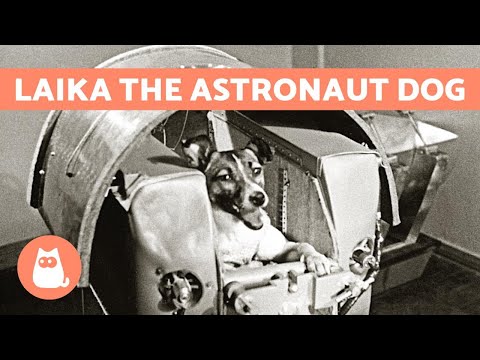
Laika’s story is significant as she became the first living creature sent into orbit. Her journey highlighted both the achievements and ethical concerns of early space exploration.
Early Life and Selection
Laika was a stray dog found on the streets of Moscow. She had a difficult early life, surviving on scraps and navigating a harsh environment. Her background made her resilient, which was appealing to Soviet scientists.
She was chosen from many stray dogs for her calm demeanor and intelligence. The team involved in the Soviet space program believed that dogs were easier to train than other animals, like monkeys. By training Laika, they aimed to gather important data for human space travel.
Mission and Significance
On November 3, 1957, Laika was launched aboard Sputnik 2. This mission marked a pivotal moment in history, making her the first dog in space. Unfortunately, it was also a one-way journey.
Laika’s mission aimed to test a life-support system designed for future human travel. The scientists hoped that data from her journey could help improve safety for astronauts. Although Laika died due to overheating, her journey paved the way for further animal and human missions into space.
Scientific Contributions and Ethical Considerations
Laika’s trip provided essential scientific information. The data collected helped shape future life-support systems for long-duration space flights.
Her journey also raised ethical questions regarding animal rights and the treatment of sentient beings in scientific research. Many believe Laika’s sacrifice could have been avoided with better technology. This ongoing discussion about the ethics of using animals in research continues to influence modern space missions and animal rights advocacy.
Post-Laika Missions and Advancements

After Laika’s historic journey, Russia continued its work in space missions, leading to important developments in technology and human spaceflight. The experiences gained from these missions shaped the future of space travel and exploration.
Further Canine Voyagers
Following Laika, dogs Belka and Strelka were sent into space on August 19, 1960, aboard Sputnik 5. They orbited the Earth and safely returned, proving that living beings could survive space travel and return safely. This mission included over 40 mice, which were also part of the experiment.
Belka and Strelka’s success helped pave the way for human spaceflight. They were even celebrated after the mission, making their mark in history. Strelka later gave birth to puppies, some of which were given to prominent figures, including a puppy for President John F. Kennedy.
Technological Progress in Spacecraft
The missions after Laika saw significant advancements in technology. Improvements in rocket launches and spacecraft design were crucial. For example, the spacecraft used in later missions were equipped with better life support systems and communication devices.
Rocket technology became more reliable under the leadership of Nikita Khrushchev, who pushed for rapid advancements during the Cold War. Space suits also evolved, providing better protection for astronauts against the harsh conditions of space. These developments laid the groundwork for future human spaceflights.
Transition to Human Spaceflight
The notable breakthrough came with the launch of Yuri Gagarin on April 12, 1961. He became the first human to orbit the Earth, thanks to the lessons learned from previous animal missions. Gagarin’s flight marked a significant step in human space exploration.
The early missions involving dogs demonstrated what was needed for humans to survive in space. The studies conducted on animals informed safety measures for astronauts, including fitting them with specially designed space suits. This knowledge was vital for Russia’s ongoing efforts to explore beyond our planet.
Cultural Impact and Continuing Legacy

Laika, the first dog in space, has a significant cultural impact that goes beyond her mission. You might have heard her referred to as “Muttnik,” a playful nod to her journey during the Cold War.
Laika’s story resonates in many ways. It sparked discussions around animal testing and ethics, particularly in the U.S. and Russia. People began to question how we treat animals in scientific research.
This interest in Laika also ties back to major historical events. The Bolshevik Revolution and the October Revolution set the stage for a Soviet space program eager to showcase its achievements. As part of this narrative, Laika became a symbol of exploration and sacrifice.
You may also know that famous figures like Ivan Pavlov, known for his work with dogs, laid the groundwork for understanding animal behavior. Laika’s mission reminded everyone of our bond with animals and the lessons they can teach us.
Culturally, Laika has left her mark in art, films, and monuments. She has become a symbol of courage and determination. In Siberia, a monument honors her legacy, showing how deeply her story resonates with many people.
Today, Laika remains a part of popular culture. Merchandise, stories, and educational programs continue to celebrate her journey. Embracing her legacy helps us understand both history and our responsibilities to animals.


