
You might wonder if pandas ever wandered through Japanese forests. The reality? It’s mostly about zoo visits and long-term loans, not wild herds.
Pandas aren’t native to Japan; they’ve lived there almost exclusively in zoos, arriving on loan from China rather than as wild residents.
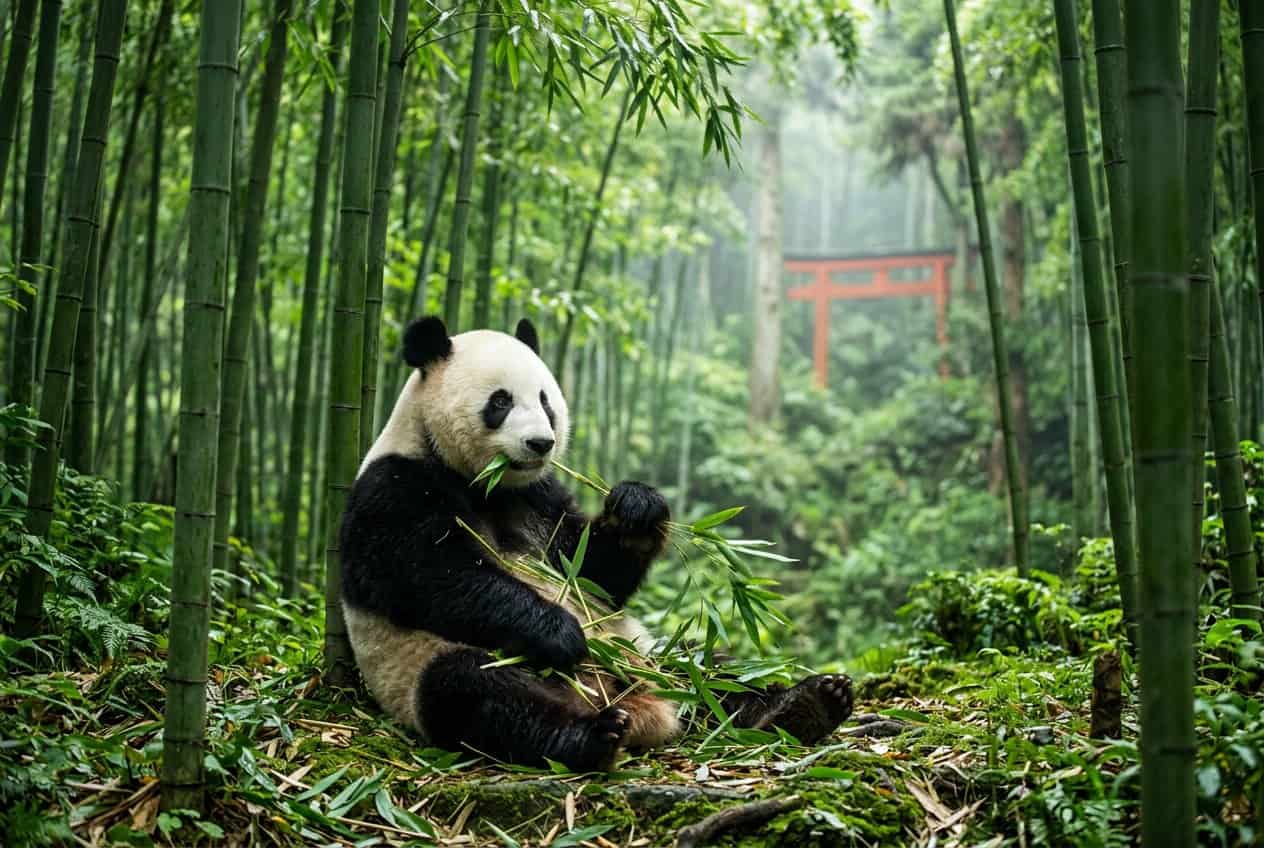
If you’re curious about the full story, let’s dig into how pandas became so beloved in Japan. I’ll touch on the history, zoo programs, and even recent events like the return of pandas to China that, for now, left Japan panda-less.
You’ll find out where pandas stayed in Japan, why they came, and what the current situation means for conservation and Japan–China relations.
History and Presence of Pandas in Japan
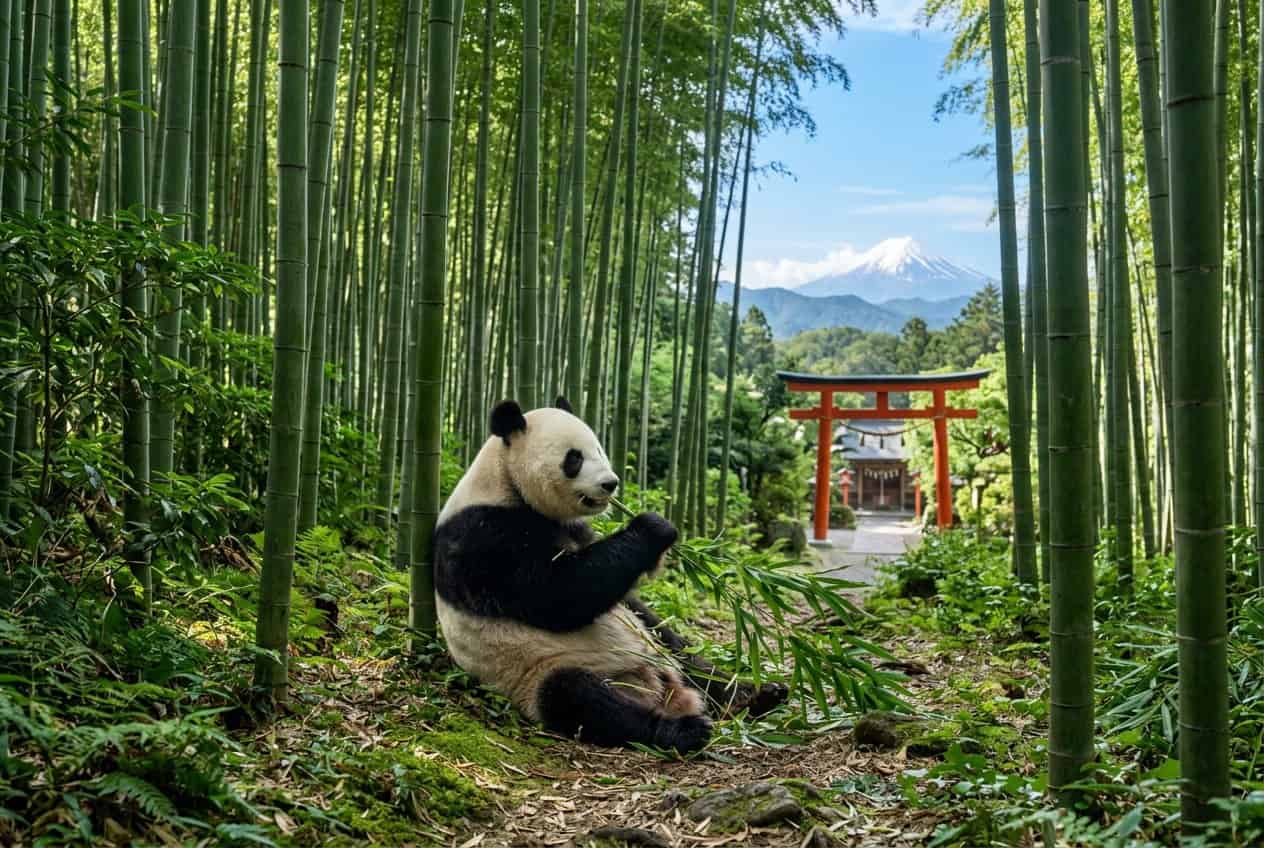
Japan’s history with giant pandas includes gift exchanges, zoo births, and official loan deals with China.
You’ll hear about whether pandas ever lived wild in Japan, how Ueno Zoo started hosting them, a few famous pandas like Xiang Xiang, and the whole “panda diplomacy” thing.
Are Pandas Native to Japan?
Pandas don’t come from Japan. Wild giant pandas live in the mountain forests of central China, not anywhere on the Japanese islands.
No fossils or historical records show wild panda populations in Japan.
There are old records—stories of panda hides or animals brought by envoys—but those animals arrived because people moved them, not because they lived there naturally.
So, any panda you see in Japan got there thanks to humans: as a gift, on loan, or through captive breeding.
This difference really matters for conservation. Japanese zoos and researchers work with Chinese partners since China is home to the wild pandas and their genetic diversity.
First Pandas at Ueno Zoo
Ueno Zoo in Tokyo welcomed its first pandas, Kang Kang and Lan Lan, in October 1972.
China sent them as a diplomatic gift to celebrate the two countries restoring relations.
Their arrival caused a sensation—crowds flocked to the zoo, and attendance soared.
Since then, Ueno Zoo has become the most famous panda spot in Japan and a symbol of public fascination.
Over the years, the zoo hosted several panda generations, sometimes through loans and sometimes through local births.
The panda exhibit boosted local business, tourism, and got people more interested in conservation.
Famous Pandas in Japan
A few panda names really stick out. Xiang Xiang, born at Ueno Zoo in 2017, became a media darling and drew huge crowds.
Kang Kang and Lan Lan (the original pair) are still remembered, and more recent pandas like Ri Ri and Shin Shin helped keep the panda spotlight shining.
Some pandas born in Japan later moved to China under loan agreements or for breeding.
People often remember particular cubs and family lines, which inspired merchandise, fundraising, and conservation campaigns.
Panda Diplomacy and Its Significance
China uses panda diplomacy—gifting or loaning pandas—as a symbol of goodwill.
Japan received its first pandas in 1972 as a diplomatic gesture when ties with China improved.
Later, pandas arrived mostly through loans that included scientific cooperation and fees.
These panda deals carry a lot of political weight. They affect tourism, cultural ties, and even conservation funding.
Recently, changes in China-Japan relations led to Japan’s last pandas returning to China in early 2026, leaving Japanese zoos panda-free for the first time in over 50 years.
That move really shows how panda diplomacy is still closely tied to international politics, public interest, and zoo partnerships.
Recent Panda Breeding, Returns, and Current Situation
Japan hosted several giant pandas over the years, thanks to long-term loans and breeding programs.
Let’s talk about the last pair in Tokyo, the earlier famous pair, how breeding worked, and what might come next.
Xiao Xiao and Lei Lei: The Last Pandas in Japan
You’ve probably heard of Xiao Xiao and Lei Lei, the twin pandas at Tokyo’s Ueno Zoo.
They attracted big crowds and lots of media buzz until plans set their return to China for late January 2026.
Their lease worked like previous panda loans: the animals stay Chinese property, and any cubs born belong to China.
Before leaving, they’ll go through travel preparations, health checks, and quarantine.
Their departure means Japan could be panda-free for the first time in over half a century.
For more details, you can check out this report on the Ueno pair’s scheduled return: MSN article.
Ri Ri and Shin Shin’s Legacy
Ri Ri and Shin Shin were another famous panda pair at Ueno Zoo.
They kept public interest in pandas alive and supported research partnerships with Chinese breeding centers.
Their presence boosted zoo attendance and helped raise money for local conservation.
Modern panda diplomacy and long-term loan practices in Japan really took shape with pairs like Ri Ri and Shin Shin.
They also played a big part in joint breeding projects, teaching Japanese keepers more about panda care and reproduction.
This legacy influenced later efforts at places like Adventure World in Wakayama and, of course, Ueno Zoo.
Panda Breeding Program Efforts
Japan started structured breeding collaborations with Chinese research centers in the 1990s.
Adventure World’s program stands out for producing several cubs through official joint breeding.
These efforts relied on artificial insemination, careful mate selection, and lots of veterinary monitoring.
The rules usually meant cubs had to go to China or were considered Chinese property.
Still, the program helped Japanese keepers build skills in husbandry, neonatal care, and behavioral study.
Some global breeding practices have faced criticism, but Japan’s programs did help improve keeper expertise and teach the public about panda conservation.
Future Prospects for Pandas in Japan
So, will pandas ever come back to Japan? Lately, China has brought several pandas back home, and honestly, there’s no guarantee they’ll send more over any time soon.
Japanese officials keep trying to open up diplomatic talks and make appeals, hoping to sway the decision. Still, China seems more interested in keeping pandas within their own borders and focusing on conservation efforts there.
If Japan decides to ask for new panda loans, they’ll probably need to make formal requests. There’d be negotiations about lease terms—usually about 10 years—and they might look for funding, whether it’s public or private.
In the meantime, Japanese zoos might pour more energy into conservation education or set up travel programs to Chinese reserves. They could also work on breeding science with Chinese partners, keeping their panda know-how sharp even if there aren’t any pandas on-site.
If you’re curious about the recent panda returns and what’s changing, here’s some reporting on Adventure World and the bigger picture: (https://www.nippon.com/en/in-depth/d01151/).


