
Ever wondered if you could outrun a chimp? Honestly, the answer’s a pretty solid no—chimps are just faster than most of us, especially when they’re going all out. They can hit speeds up to 25 miles per hour, which leaves most people in the dust.
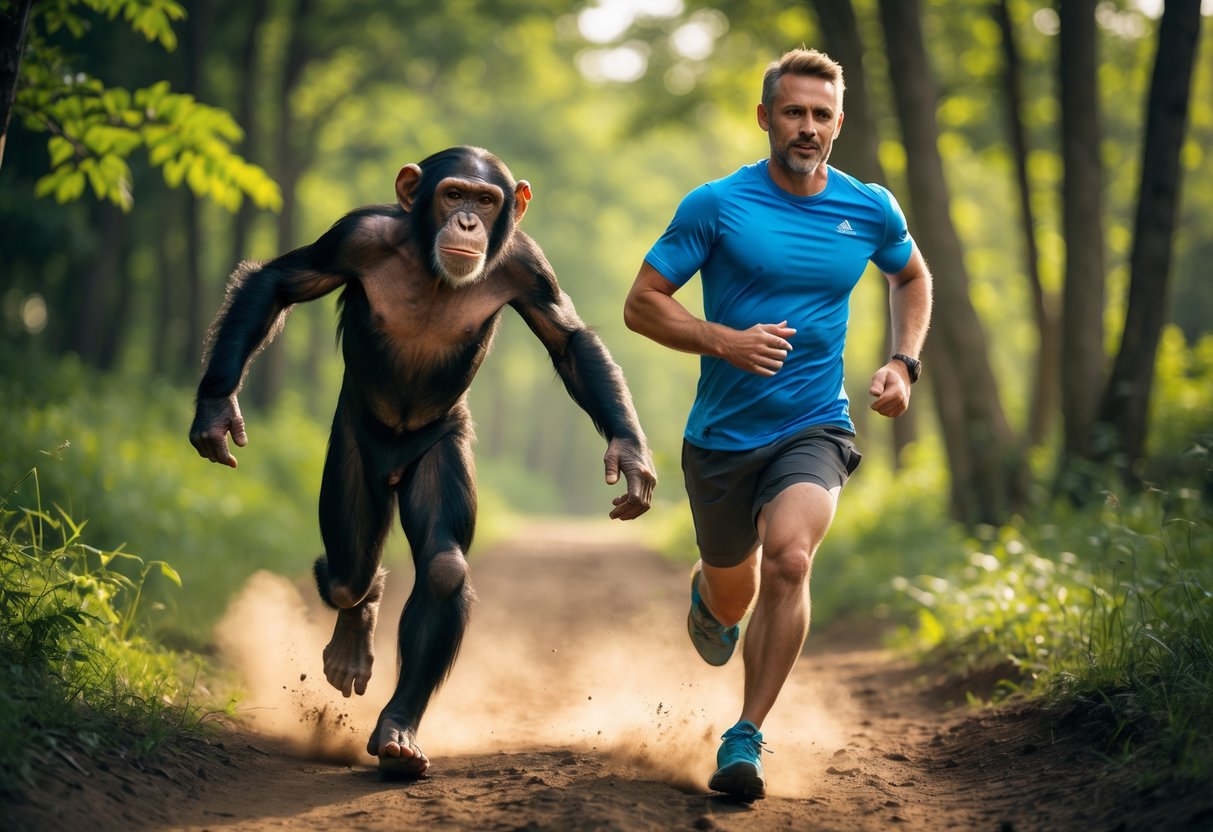
Maybe you’d stand a better shot on a flat track, but in real life—especially in the wild or anywhere with trees—a chimp’s speed and agility are tough to beat.
We humans do have endurance and some other tricks up our sleeves, though. That counts for something, right?
When you realize how quick chimps are, it kind of changes how you see them. Let’s dig into why their speed matters and what you’d really be up against if you ever had to run from one.
Human Speed Versus Chimpanzee Speed

When we talk about running, chimps and humans have pretty different strengths. Chimps use all four limbs to move fast, while humans stick to two.
Your speed—and a chimp’s—depends on things like body type and stamina.
Chimpanzee Top Running Speed
Chimps can reach up to 25 miles per hour. They run on all fours, using both arms and legs, which lets them move quickly over short distances.
This four-limbed style gives them a clear advantage, especially in the dense forests they call home.
But here’s the thing: chimps can’t hold that top speed for long. Their muscles are built for quick, powerful bursts, not for running marathons.
If a chimp needs to escape or chase something, it’ll go for a fast sprint, not a long run.
Typical Human Running Speed
Most people run between 6.5 and 8 miles per hour.
Trained sprinters can break 20 miles per hour, but only for a few seconds.
Since you run on two legs, endurance matters more for you than for a chimp.
The way your legs and pelvis are built helps you keep going for a while without wearing out.
Humans evolved for endurance, not crazy short sprints. That’s why you can keep a steady pace for miles, which comes in handy for distance running.
Factors Affecting Both Species’ Speed
A lot of things affect how fast you or a chimp can go. Muscle type, limb use, and body size all play roles.
Chimps have more fast-twitch muscles, which give them those explosive bursts. Humans have a mix, so you get some speed and some endurance.
The ground you’re running on matters, too. Chimps do best on rough, forested ground. Humans are at their best on flat tracks or roads.
Chimps have a lot of upper body strength, which helps their four-limbed running. Humans spread their weight out more evenly for two-legged running.
Comparing Short Distance Sprints
In a short sprint, chimps usually beat humans by 5 to 10 miles per hour. Their muscle power and limb advantage make them quick.
If a chimp sprints at 25 mph, it could catch up to you fast if you tried to run.
Humans only hit top speed for a few seconds—maybe less than 100 meters. Chimps use their speed and strength to overpower or escape threats in those quick bursts.
Trying to outrun a chimp in a sprint? Yeah, it’s not looking good for us.
If you want more info or a deeper dive, check out Chimpanzee vs Human Speed.
Variables That Impact Your Chances
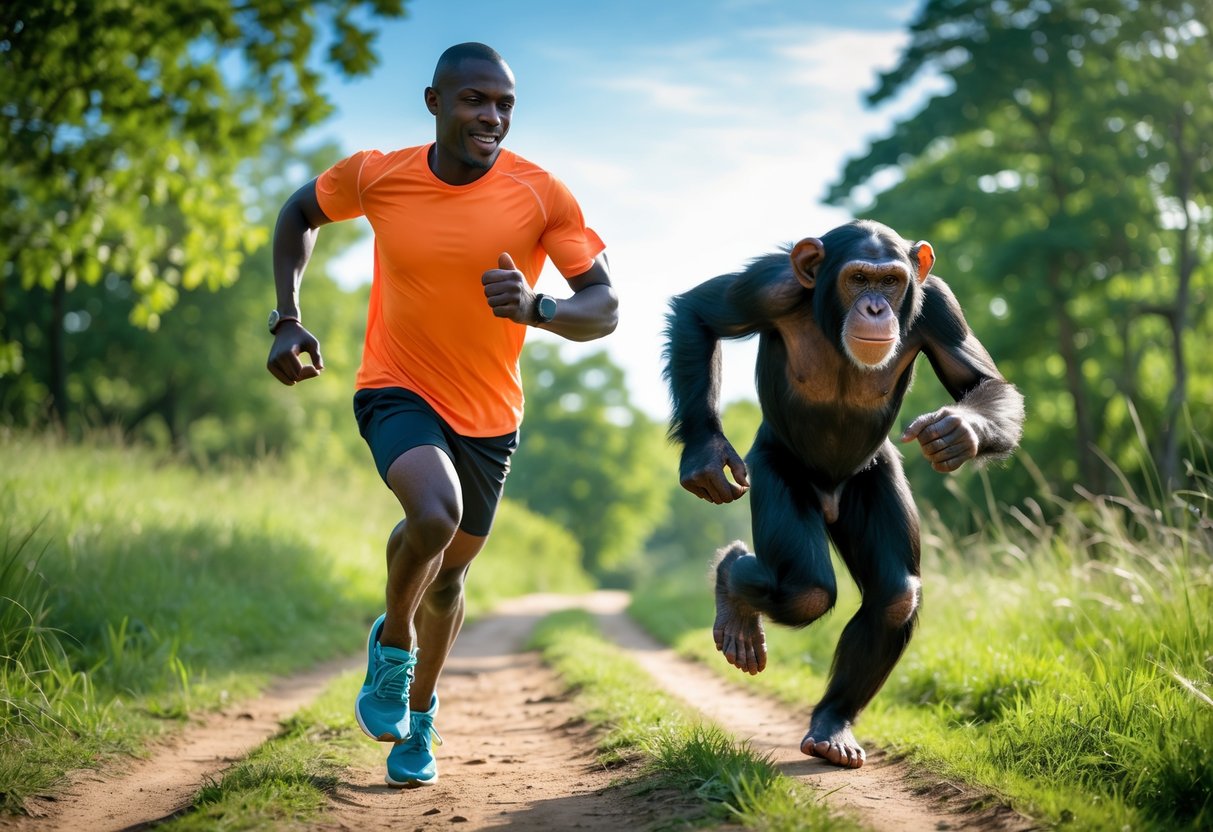
Whether you could outrun a chimp really depends on a bunch of things. Your speed, the ground you’re on, and what the chimp decides to do all play into it.
Knowing these details gives you a better idea of your odds.
Terrain and Escape Strategies
The ground under your feet changes the game. Chimps move fast—up to 25 miles an hour—but they’re built for forests, trees, and uneven land.
If you find yourself on a flat, open road or track, you might have a slight edge since humans can keep a steady pace over distance.
Using obstacles can help, too. If you duck through bushes or around rocks, you might slow the chimp down a bit.
Chimps are great climbers, though, so getting somewhere they can’t follow—like a tight spot or a high ledge—could help you get away.
Physical Abilities and Training
Your own speed is just part of it. Chimps are about 1.2 to 1.5 times stronger than we are because they have more fast-twitch muscle fibers.
That gives them those powerful bursts and quick acceleration.
If you’ve trained for sprinting or distance running, it can make a difference. Humans can keep running for a long time without stopping, but chimps tire out faster.
If you keep your breathing steady and pace yourself, you might outlast a chimp in a longer chase.
Behavioral Differences in Pursuit
Chimpanzees don’t always chase the way you’d think. They usually go for surprise attacks or quick moves instead of dragging out a long chase.
Most chimps rely on their strength and powerful bite. They’ll try to end fights fast by biting or hitting, not by running after you for miles.
If you’re the one escaping, you might actually have the edge by just running without looking back. Chimps often lose interest if you don’t stop or get caught right away.
So yeah, keeping calm and moving steadily really matters.
Learn more about chimp speed and strength at Chimpanzee running speed and humans.


