
If you’re considering adding a chinchilla to your home, you might wonder, can you cuddle with a chinchilla? The answer isn’t straightforward. While some chinchillas can become affectionate and enjoy close contact, others may not be as eager for cuddling. Understanding your chinchilla’s personality is key to building a bond with them.

Chinchillas are naturally playful and curious animals. They often prefer to explore their surroundings rather than be held too closely. If they feel scared or uncomfortable, they might show it by trying to escape.
Patience is important. Over time, some chinchillas can learn to enjoy affectionate interactions with their owners.
Keep in mind that each chinchilla is unique, so pay attention to their body language to see what they like. Fostering trust through gentle handling and positive experiences can help make your chinchilla more comfortable with cuddling. Developing this bond may take time, but it can be very rewarding for both you and your pet.
Understanding Chinchilla Behavior

Chinchillas are unique pets with specific behaviors and social needs. Knowing their social characteristics and how they show affection will help you connect with your chinchilla.
Social Characteristics of Chinchillas
Chinchillas are naturally social animals. In the wild, they live in groups, which helps them feel secure. This instinct carries over to domestic life.
Your chinchilla may enjoy interacting with you or other chinchillas. If you have more than one, they often form strong bonds.
When socializing, be patient. Always let your chinchilla approach you, as they can be cautious.
Remember that excessive handling may stress your pet. So, keep interactions short and sweet. A calm environment can help them feel at ease and open to socialization.
Signs of Affection and Trust in Chinchillas
Chinchillas express trust and affection in subtle ways. One sign is when they allow you to pet them or nuzzle against you. This means they feel safe with you.
Another sign is when your chinchilla engages with you during playtime. They might show curiosity by exploring you or your surroundings.
Chinchillas also groom themselves when they are comfortable. If they start to relax around you, it shows that they trust you.
Watch for your chinchilla’s body language, such as relaxed ears and a calm posture. Creating a safe space will help build a strong bond and increase trust.
The Art of Handling Chinchillas
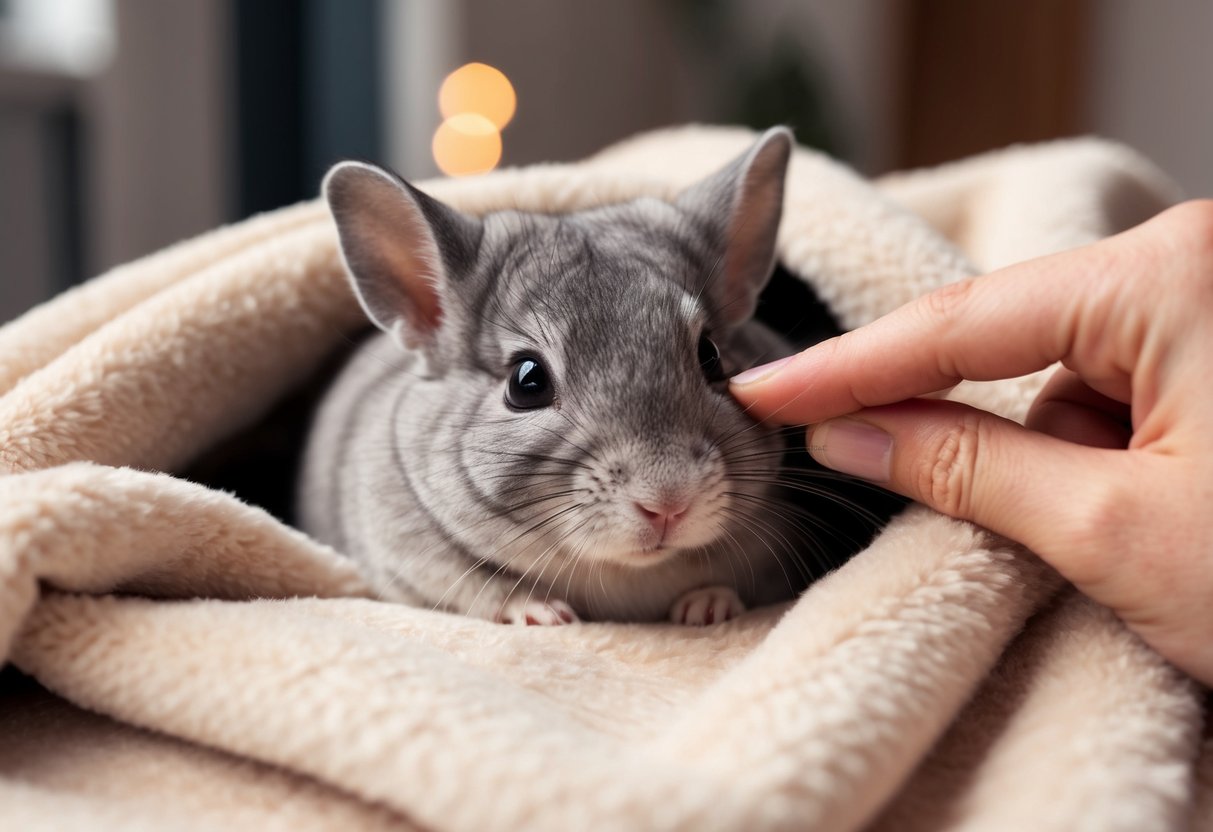
Handling chinchillas requires care and patience. You’ll want to make cuddle time enjoyable for both you and your pet. Understanding how to approach your chinchilla makes a big difference in building trust and comfort.
Preparing for Cuddle Time
Before you cuddle with your chinchilla, ensure the environment is calm. Choose a quiet area free from loud noises or sudden movements. Introduce your chinchilla to your scent so it feels safe.
Create a cozy space: You can use a soft blanket or a small, comfortable container to help your chinchilla feel secure.
Make sure your hands are clean and free from strong scents, as chinchillas have sensitive noses.
Time it right: Avoid handling them right after meals or during playtime when they might be more active. Let them settle down first.
How to Approach and Hold a Chinchilla
Approach your chinchilla slowly to avoid startling it. Speak gently so it recognizes your voice. You can offer a treat to create a positive connection.
When you’re ready to hold your chinchilla, support its body properly. Cradle it with both hands, making sure to support its back and hindquarters.
Chinchillas have delicate ribs, so avoid squeezing or holding them too tightly.
Tip: If your chinchilla resists being held, let it come to you. Encourage it with treats, allowing it to explore your hands first.
Always watch for signs of stress, like twitching or trying to escape. If your chinchilla seems uncomfortable, give it some space. With patience, you can build a loving bond through careful handling.
Caring for Your Chinchilla
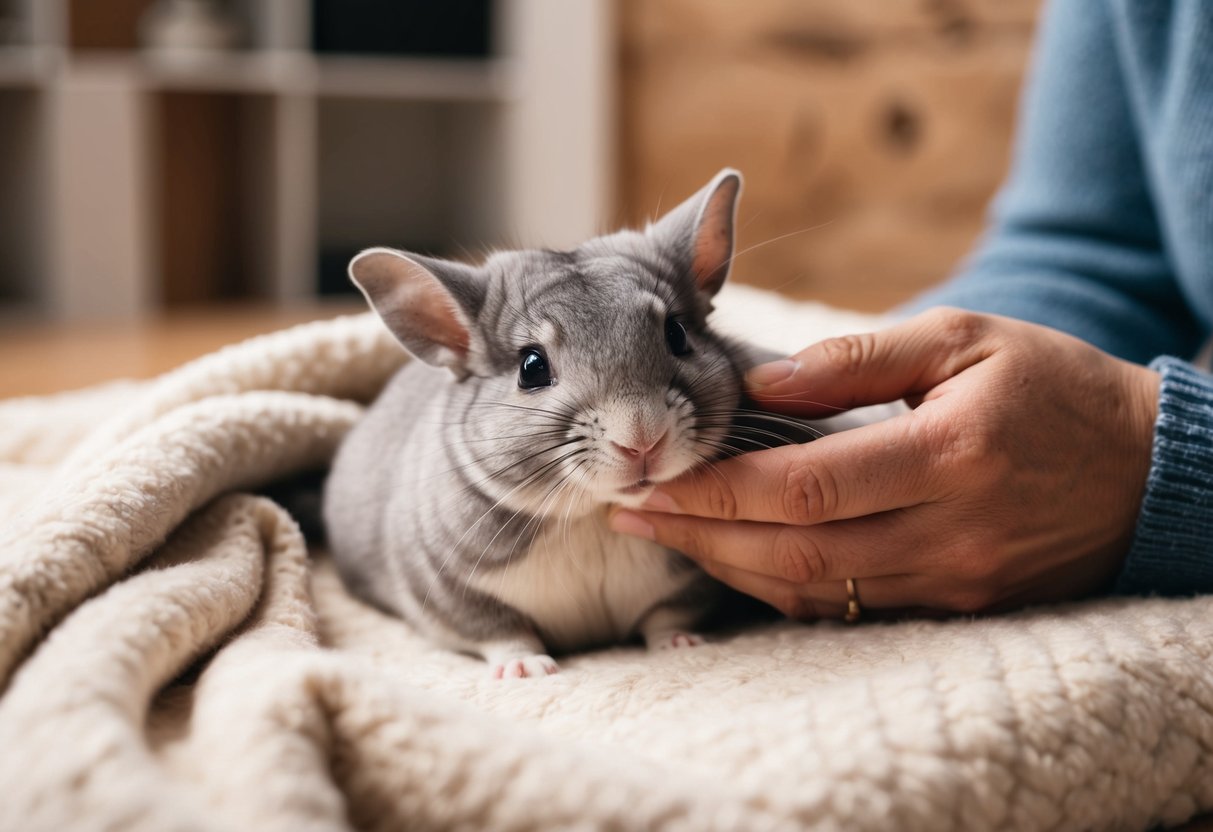
Taking care of your chinchilla involves creating a cozy space for them and building a trusting relationship. These pets can be skittish, so understanding their needs is essential for better bonding.
Creating a Comfortable Environment
Start by providing a spacious cage with proper ventilation. The cage should be lined with safe bedding, like aspen or paper-based products. Avoid cedar or pine shavings as they can be harmful.
Ensure your chinchilla has hiding spots, like tunnels or small houses, to feel secure.
It’s essential to leave room for toys that promote exercise and mental stimulation. Chinchillas need to chew, so provide safe chew toys.
Temperature matters too! Keep your chinchilla in a cool area, as they are sensitive to heat. Aim for a temperature between 60°F to 70°F.
Fostering a Cuddly Relationship
To build a positive relationship, spend consistent time with your chinchilla. Begin with gentle handling rather than forceful cuddling.
Slowly introduce them to being held as they become more comfortable around you.
Use treats to encourage interaction. Allow them to approach you on their terms. This helps in building trust and reduces stress.
Observe their body language. If your chinchilla shows signs of fear, like shaking, give them space.
Over time, with patience and love, many chinchillas can learn to enjoy being held.


