
Ever wondered if chimpanzees could actually talk like us if they really tried? Honestly, chimpanzees can’t speak because their bodies and brains just aren’t made for human language. Their vocal cords, mouth shapes, and brain wiring stop them from forming words or sentences like we do.

But chimps absolutely communicate. They use sounds, gestures, and sometimes even sign language to share ideas and feelings. Sure, their way of “talking” is different and a lot simpler than ours, but it’s still pretty impressive and shows just how clever they are.
Curious about why chimps can’t talk like people and how they manage to get their messages across anyway? Let’s check out some surprising details about their communication.
Can Chimpanzees Talk If They Really Wanted To?
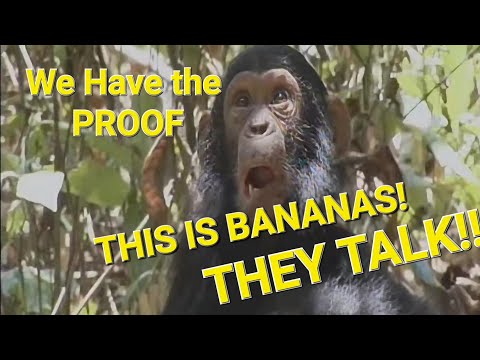
Chimps have all kinds of ways to communicate, but speaking like humans just isn’t in the cards for them. Their bodies and brains don’t make it easy. They can make sounds and understand some gestures, so they do share ideas, but there are definite limits.
Physical and Biological Barriers to Speech
Talking depends on your mouth, tongue, and vocal cords working together just right. Chimps have a different setup.
Their voice box sits higher in the throat. Their tongues can’t move as flexibly as ours.
These differences mean chimps can’t make the wide variety of sounds needed for words. Instead, you’ll hear grunts, hoots, and other basic noises.
Even if a chimp wanted to say a word, their body just wouldn’t let them. Their vocal cords and mouth don’t have the right shape.
Differences Between Human and Chimpanzee Vocal Anatomy
Humans have a vocal system built for speech. Your larynx, lips, and tongue all work together to form clear sounds.
Chimps’ larynx sits higher, so it’s hard for them to change sound shapes the way we do.
We also control our breathing and mouth movements really precisely when we talk. Chimps don’t have that kind of control.
Even though their vocal cords are somewhat similar, they just don’t have the range to make the complex sounds we use in language.
Cognitive Abilities Related to Language
Talking isn’t just about mouths—it’s about the brain, too. We have special brain areas that plan and understand language.
Chimps have similar brain parts, but they’re smaller and not as specialized.
Because of this, chimps can pick up basic signs or sounds but can’t handle grammar or build complex sentences. Their brains don’t send detailed signals to control speech the way ours do.
So, even if they get some language basics, speaking like us just isn’t possible for them.
Chimpanzee Communication Skills in the Wild
Out in the wild, chimps use all sorts of sounds, gestures, and facial expressions to talk with each other. They mix calls like grunts and hoots to change meanings.
They use hand signals for things like asking for food or grooming.
Chimps can even combine sounds into different messages—like warning about danger or letting others know where food is. They react to each other pretty quickly, showing a sort of conversational back-and-forth.
That’s smart communication, no doubt, but it’s still nowhere near full human language. For more on this, see chimpanzees’ complex communication research.
Exploring Chimpanzee Communication Beyond Spoken Language

Chimps use a mix of sounds, gestures, and facial expressions to get their point across. They don’t speak like us, but their methods can get pretty complex.
Some experiments even show they can learn basic sign language and symbols. Still, there are limits to how much humans and chimps can really understand each other.
Complexity of Gestures and Vocalizations
Chimps use all sorts of vocal sounds—grunts, screams, barks. These noises show emotions like happiness or fear.
They also wave, raise their arms, and use facial expressions to send messages.
What’s really interesting is how they combine these signals. A chimp might grunt while making a certain face to get your attention or invite play.
These combos let them share more ideas than single sounds ever could.
Research shows young chimps have some vocal flexibility. They can change their calls depending on mood or situation.
This flexibility is a building block for human speech, but it’s still pretty limited in chimps (see more on vocal flexibility).
Famous Language Experiments With Chimpanzees
Maybe you’ve heard of chimps like Washoe and Koko. Washoe learned American Sign Language and used signs to ask for things or describe objects.
Koko picked up lots of signs too and could even put a few together to make simple sentences.
These studies showed that chimps can learn some parts of human language, like signs or symbols. They can communicate basic ideas and needs, but they don’t invent new words or use complex grammar the way we do.
These experiments helped scientists realize chimpanzee mental skills are impressive, but also pretty different from our language abilities. These chimps mostly used language-like communication by copying and responding.
Limits to Interspecies Communication
Even with these skills, chimpanzees just can’t grasp or use human language the way people do. Their brains and vocal tracts simply don’t let them speak like us.
So, they can’t talk—even if they seemed to want to. Chimp communication relies mostly on gestures and calls.
Humans, on the other hand, use way more complex grammar and a wider range of sounds. Chimps just don’t have those tools. Because of these biological limits, any conversation with a chimp will always stay pretty basic.
But honestly, digging into how chimps communicate can teach us a lot about where human language came from—and what sets it apart.
If you’re curious about why chimps can’t talk, check out the article on their biological limits to speech and how gestures play into their communication.


