
If you enjoy taking your dog for walks in nature, you might wonder about the safety of encounters with wildlife like badgers. Badgers can pose a risk to dogs, not just through potential physical confrontations but also by carrying diseases. Understanding these risks can help you take precautions to keep your furry friend safe during outdoor adventures.
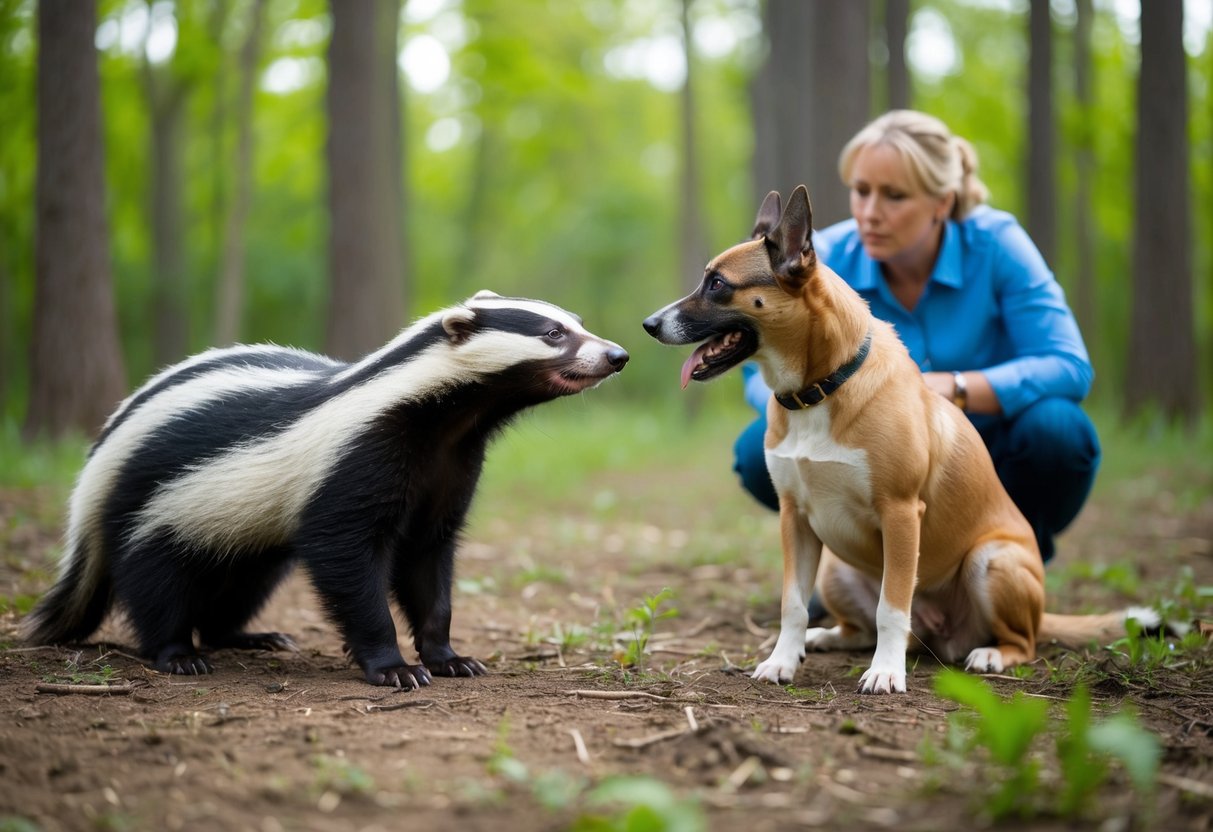
Badgers usually avoid dogs and are not aggressive unless threatened. However, they can become defensive if cornered, which may result in injury to your dog. Additionally, badgers can carry diseases that could be harmful to your pet, so knowing what to look for is key to ensuring your dog stays healthy.
This blog post will explore how badgers might affect your dog’s health, the diseases they can carry, and tips for safe encounters in the wild. With a little knowledge, you can enjoy your time outdoors while keeping your pet protected from unwanted risks.
Understanding Badgers and Their Behavior
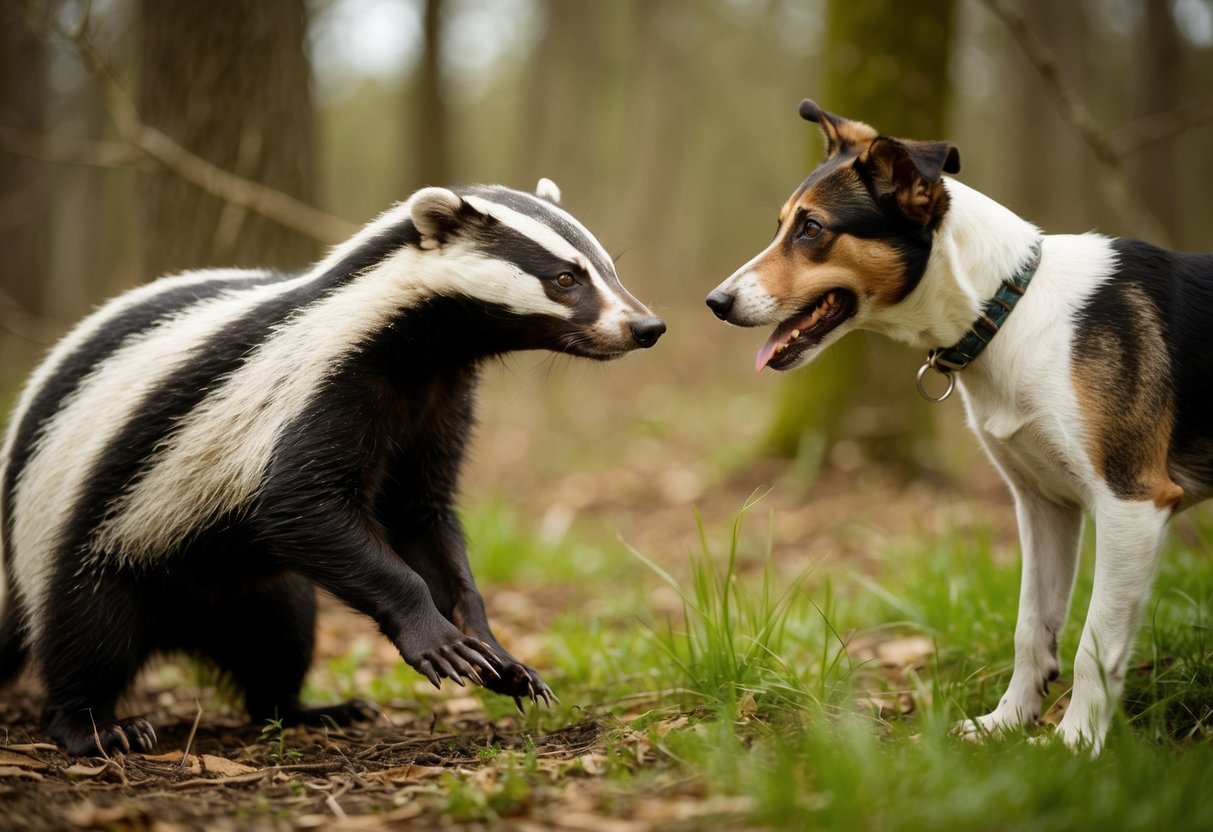
Badgers are fascinating creatures with distinct habits and traits. By knowing more about their habitat, diet, and behavior, you can better understand how they might interact with your dog.
Habitat and Diet
Badgers can be found in diverse habitats, including forests, grasslands, and urban areas. Their homes, known as setts, are often underground burrows that can extend quite deep.
As omnivores, badgers eat a variety of foods. Their diet includes insects, small mammals, fruits, and roots. This varied diet reflects their adaptability and plays a role in their interactions with other animals, including dogs.
In the wild, you might encounter the American badger or the honey badger, each with unique habits. While they generally prefer to avoid conflict, they can be unpredictable if threatened.
Badger Subspecies
There are several subspecies of badgers, but the most common ones include the European badger and the American badger. Each subspecies has its own behavior and traits.
The honey badger, for example, is known for its fearless nature and can be very aggressive if provoked. In contrast, the American badger tends to be more solitary and less confrontational.
Understanding the differences among these subspecies can help explain how they might behave around your dog. Their physical traits, such as strong jaws and sharp claws, offer them a means of defense, yet most badgers prefer to retreat rather than fight.
Traits of Aggression
Badgers are known for their aggressive behavior when cornered. While they are not typically dangerous to dogs, they will defend themselves if threatened. Their sharp claws and strong jaws can cause injuries if a dog approaches too closely.
Most badgers prefer to avoid dogs altogether. They usually only engage in aggressive actions when they feel there is no escape.
To minimize risks, keeping your dog on a leash in areas known for badger activity is advisable. This way, you can help ensure both your dog’s safety and that of these wild animals.
Health Risks of Badgers to Dogs

Badgers can pose several health risks to dogs, both through disease transmission and potential injuries. Understanding these threats can help you keep your dog safe during outdoor adventures.
Disease Transmission
Badgers can carry diseases harmful to dogs. Tuberculosis and rabies are two serious risks. Tuberculosis, caused by bacteria found in badger feces or urine, can make your dog very ill. Symptoms include coughing, weight loss, and vomiting.
Rabies is another critical concern. This viral disease can cause severe neurological problems and is often fatal. If your dog has contact with a badger, watch for any unusual behavior, such as aggression or confusion.
It’s essential to keep your dog vaccinated and to avoid areas where badgers are known to roam. Clean any areas where your dog may come in contact with badger droppings to reduce the risk of illness.
Common Badger-Related Injuries
Badgers are not usually aggressive, but they can defend themselves when threatened. If a badger feels cornered, it may attack, leading to bites that can injure your dog.
Badger bites can cause serious wounds. These injuries can become infected quickly, which may require veterinary treatment. Look for signs of injury, like bleeding or limping.
If your dog chases or provokes a badger, it may lead to a conflict. Always supervise your dog in areas where badgers live. Keeping your dog on a leash can help prevent encounters that could lead to injury or disease.
Interaction Between Dogs and Badgers
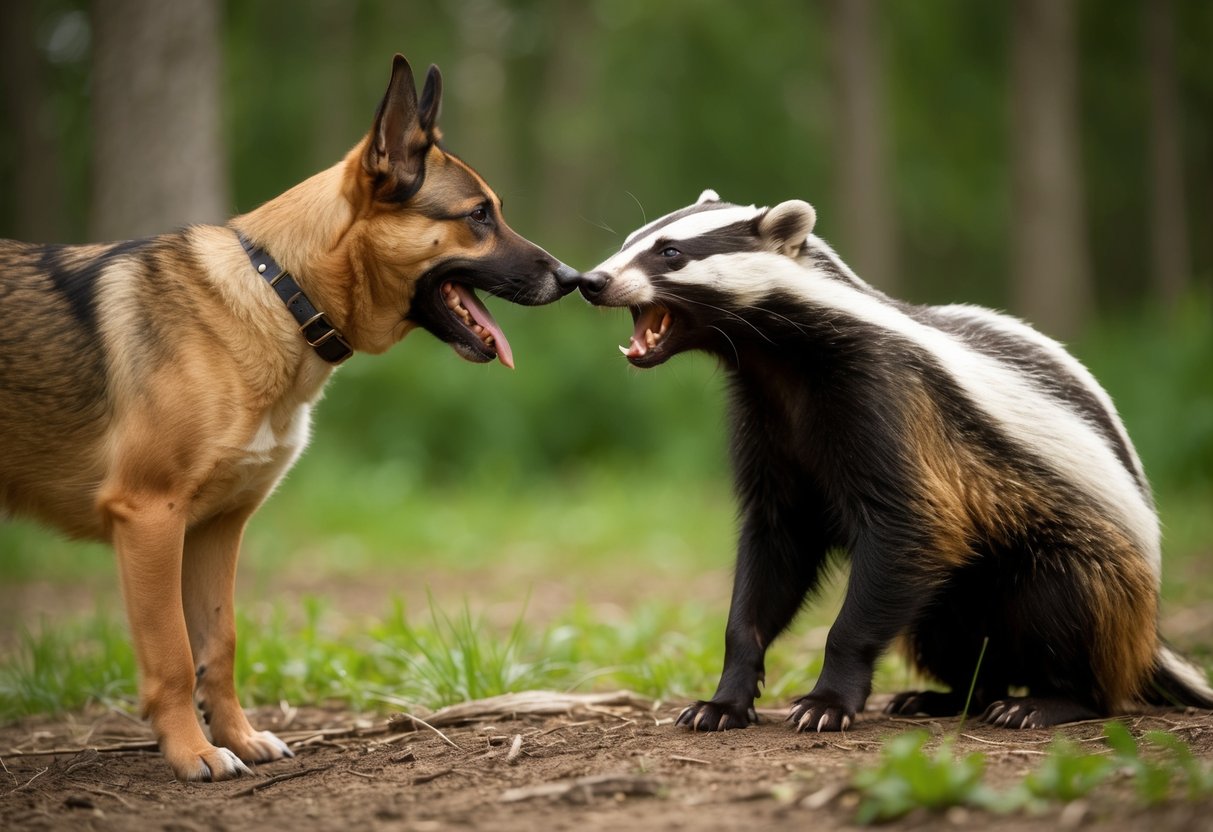
When dogs encounter badgers, it can lead to various situations, some potentially harmful. It is essential to understand how to prevent these encounters and what to do if your dog comes across a badger.
Preventing Encounters
To prevent your dog from interacting with badgers, keep them on a leash during walks, especially in areas where badgers are known to live. Badgers are nocturnal and tend to dig burrows, so be aware of these signs during the day.
Secure your yard to prevent badgers from entering. This may include installing fences that are high enough and buried deep to stop them from digging underneath. Additionally, clear away any food sources. Pet food outside or open trash can attract badgers, increasing the chance of contact.
What to Do If Your Dog Encounters a Badger
If your dog spots a badger, stay calm and avoid panicking. Do not let your dog chase or corner it, as that could provoke an attack. Badgers can defend themselves and may bite if they feel threatened.
Use a firm, calm voice to call your dog back and redirect its attention. Keep a safe distance while observing the situation. If your dog is bitten, check for injuries and contact your vet immediately. Badger bites can break the skin and may carry bacteria, leading to infections.
If you notice signs of badger feces near your home, clean it up safely to avoid attracting your dog. Badger poo can carry harmful pathogens, so it’s best to use gloves and dispose of it properly. By taking these precautions, you can help ensure safe encounters with wildlife.
The Impact of Humans on Badger Populations
Human influence can heavily affect badger numbers. Activities like urbanization, farming, and road construction disrupt their natural habitats. These actions can lead to a decline in badger populations and even habitat fragmentation.
Additionally, many view badgers as pests or blame them for the spread of diseases like bTB, which is not entirely accurate. Culling badger populations has been debated, often leading to more negative effects on biodiversity than positive.
Being aware of these impacts on wildlife is essential in promoting better conservation practices. Engaging in responsible land use and supporting local conservation efforts can help improve the situation for badgers and the ecosystems they inhabit.


