
Ever wondered if a gorilla and a chimpanzee could actually have babies together? You’re definitely not the only one who’s thought about it.
These two apes share some traits and look a little alike, so it’s easy to imagine a gorilla-chimp hybrid. But nature isn’t always that simple.

Gorillas and chimpanzees can’t breed because their DNA and chromosomes just don’t match up enough for reproduction to work. They’re close relatives and both have 48 chromosome pairs, but the way their genes are arranged is too different.
So, their sperm and egg cells won’t combine to create a baby—no matter how much we might wish otherwise.
People have told stories or pointed at odd-looking apes, wondering if they were hybrids. But scientists haven’t confirmed any of these cases.
If you’re curious about why their biology puts a stop to crossbreeding, let’s dig into the real facts behind these fascinating animals.
You can check out this detailed article to learn more about whether a gorilla can breed with a chimpanzee.
Can a Gorilla Breed with a Chimpanzee?
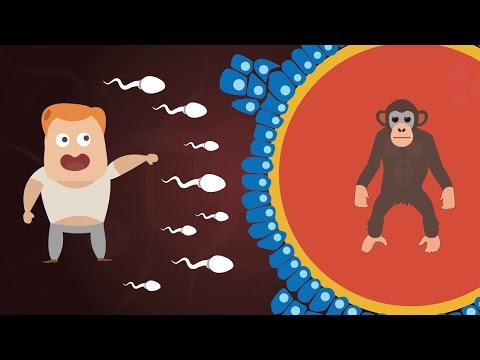
Maybe you’ve wondered if a gorilla and a chimpanzee could have a baby, since they’re both great apes and look a bit similar.
But their biology and history (and the stories about them) really show why this just isn’t possible.
Genetic Differences and Chromosome Counts
Both gorillas and chimpanzees have 48 chromosomes. Still, their DNA is arranged in different ways.
Humans share about 98% of DNA with gorillas and about 99% with chimpanzees. Even though the chromosome numbers are the same, the gene sequences aren’t.
These genetic differences block fertilization from producing a viable embryo. Even if a gorilla and a chimpanzee mated, the DNA wouldn’t combine right, and an offspring wouldn’t develop or survive.
Historical Hybridization Attempts
Nobody has ever verified a gorilla and chimpanzee hybrid, not in the wild or in captivity.
People have speculated about crossbreeding, but science hasn’t found a single shred of evidence that it can happen.
Scientists have looked into the idea and say their evolutionary paths split too far apart to allow hybridization.
Experiments with related species sometimes create hybrids, but gorillas and chimpanzees just hit a wall due to their genetic and reproductive barriers.
Legends and Myths Like the Koolakamba
Maybe you’ve heard someone mention the Koolakamba—supposedly an ape that’s part gorilla, part chimpanzee.
Stories about this creature go back decades and describe it as a strange mix of both.
But, honestly, there’s no real proof for the Koolakamba. Most scientists believe it’s just a variation of chimpanzees or gorillas, or maybe even a myth altogether.
These tales usually come from misidentified animals or just wishful thinking. They don’t change the scientific fact that gorillas and chimpanzees can’t breed.
For more details, you can check out why gorillas and chimpanzees cannot breed.
Key Differences Between Gorillas and Chimpanzees

Gorillas and chimpanzees might seem similar at first glance, but you’ll quickly spot some big differences.
Their looks, behavior, and even their habitats set them apart. It’s kind of fascinating to see how unique each species really is.
Physical and Behavioral Traits
Gorillas are way bigger and stronger than chimpanzees. Adult male gorillas can weigh up to 450 pounds.
Chimpanzees, on the other hand, usually weigh around 150 pounds.
Gorillas have broad chests, big hands, and small ears that sit further back on their heads. Chimpanzees show off longer limbs, are more agile, and have larger, more noticeable ears.
When it comes to behavior, chimpanzees act more curious and active. They use sticks and other tools to get food, and they’re great at climbing.
Gorillas spend most of their time on the ground and move slowly but with a lot of power. Chimpanzees seem more playful, while gorillas often appear calm and steady.
Social Structures and Habitats
Gorillas usually stick together in groups, with a dominant male—known as a silverback—leading the way. These groups spend most of their time on the ground, tucked away in thick forests.
Chimpanzees, on the other hand, don’t really settle into fixed groups. Individuals move between subgroups all the time. Their social lives feel a bit chaotic, honestly, but there’s a lot of grooming and shifting alliances going on.
You’ll spot chimpanzees in all sorts of places, from rainforests to open savannas. Gorillas, though, seem to really prefer those dense, mountainous forests.
Because their habitats are so different, they end up with totally different daily routines and ways of interacting with the world around them. It’s fascinating how much that shapes their survival.
If you’re curious and want to dig deeper, check out this detailed comparison from Leo Zoo and the Animallot guide.


