
If you’ve ever wondered about the connection between bulls and buffalo, you’re not alone. Many people are curious about whether these powerful animals can mate and produce offspring. The clear answer is that bulls and buffalo cannot breed because they belong to different species. This means that, despite their similarities in size and strength, they are unable to reproduce together.
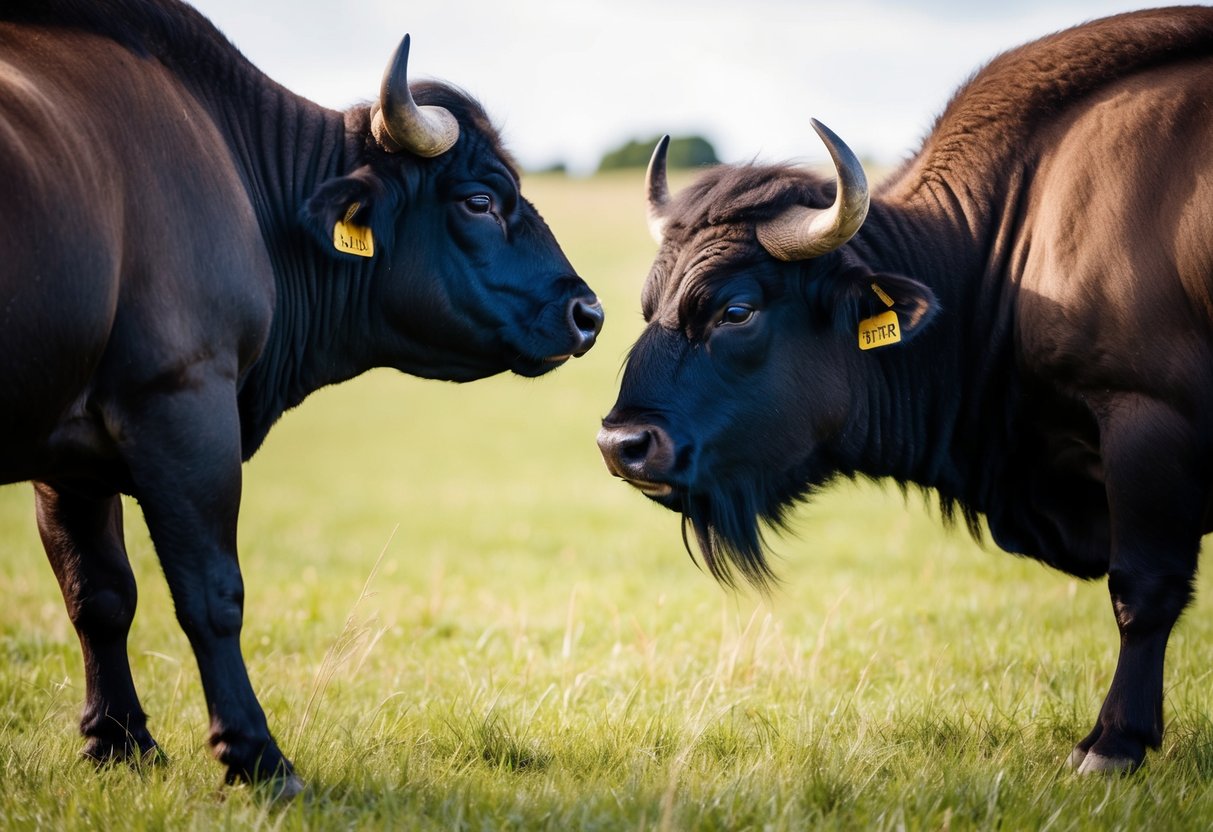
You might find it interesting that while bulls are often associated with traditional cattle breeding, buffalo represent a different lineage altogether. They have unique characteristics and serve different purposes in farming and agriculture. Understanding these differences can help you appreciate the fascinating world of livestock and their roles in our lives.
As you read on, you’ll discover more about the distinct traits of bulls and buffalo, their breeding habits, and what sets them apart. Join us as we dive deeper into this intriguing topic.
Understanding the Species Involved

Learning about the species involved is crucial to understanding whether a bull and a buffalo can breed. Here, you will explore the Bovidae family, the biology of bison and cattle, and the differences between true buffalo and American bison.
Bovidae Family Basics
The Bovidae family includes animals like cattle, bison, buffalo, and sheep. Members of this family are often called bovines. They share specific traits, such as having cloven hooves and being herbivores. Within this family, you will find:
- Domestic cattle (Bos taurus): These are the cows and bulls you see on farms.
- True buffalo: This refers to species like the water buffalo and African buffalo, which are distinct from North American bison.
- Bison: The American bison is often called buffalo in the U.S., but it’s not a true buffalo.
Understanding these classifications helps clarify any misconceptions about breeding between these species.
Comparative Biology of Bison and Cattle
Bison and cattle have important biological differences. For instance, the American bison is larger, has a hump on its back, and is adapted to colder climates. Cattle, on the other hand, come in various breeds, each with unique traits suited for specific environments.
One key difference is their genetics. Cattle are domesticated and have been bred for traits like milk production, while bison remain wild. Due to these genetic differences, bulls (uncastrated male cattle) and bison cannot successfully mate. They are simply too different from each other in terms of their DNA.
True Buffalo vs. American Bison
True buffalo include species like the water buffalo and African buffalo. They are distinct from the American bison, which is often mistakenly called a buffalo.
Water buffalo are typically found in Asia and are known for their strength in agricultural work. African buffalo, found in Africa, are known for their herd behavior and adaptability. Unlike the American bison, these buffalo can be bred with some species of domestic cattle, producing hybrids, but the same does not apply to bison and bulls.
These distinctions are essential when discussing the capabilities of breeding between these animals.
Breeding and Hybridization Insights

Understanding how bulls and buffalos can breed offers a fascinating view into hybridization. This section explores the feasibility of crossbreeding, examines hybrid types like beefalo and cattalo, identifies challenges in breeding, and considers economic and ecological factors.
Feasibility of Crossbreeding
Crossbreeding a bull with a buffalo is possible, but there are challenges. The first step in this process often involves mating a domestic bull with a female buffalo. After the first cross, the resulting offspring can breed back with either parent type. These hybrid offspring can be quite fertile, unlike other hybrids, such as mules.
For successful crossbreeding, timing is essential during the breeding season. Bulls are typically polygynous, meaning they mate with multiple females. The gestation period for hybrids can vary, but it is similar to that of a buffalo, usually around 10 to 11 months.
Understanding Beefalo and Cattalo Hybrids
Beefalo is a hybrid of beef cattle and buffalos, known for their hardiness and dual-purpose meat production. They often show characteristics from both parents, which can lead to better weight gain and adaptability. Cattalo, on the other hand, is a cross between cattle and bison.
These hybrids generally possess traits that make them appealing for ranchers. They often have a leaner meat profile, which is desirable in today’s market. Their hybrid vigor can also mean improved disease resistance and better survival rates in various climates.
Challenges and Considerations
While hybridization can be beneficial, there are challenges to consider. Aggressive behavior may be more common in buffalo hybrids, necessitating careful handling. Additionally, inbreeding may pose risks if you’re not changing breeding stock regularly.
Monitoring the genetic diversity within your herd is crucial. This helps prevent potential health issues and ensures the best traits are passed down. Moreover, consider the breeding costs, including veterinary care and the potential need for extra space for hybrid offspring.
Economic and Ecological Factors
Raising hybrids like beefalo and cattalo can offer economic benefits. These include lower feed costs and premium meat prices. However, you should assess local market demand and breeding costs before proceeding.
From an ecological standpoint, hybrids can utilize pasture more efficiently. This offers potential benefits for land use. However, you also need to weigh the impact of introducing hybrid animals on local ecosystems. Understanding these factors will help you make informed decisions that align with both economic and ecological goals.


