
You can usually tell the difference between carpet beetles and bed bugs by looking at what they eat, where they hide, and what they leave behind.
Bed bugs feed on blood and stay close to sleeping areas. Carpet beetles feed on fibers and are more likely to show up in closets, rugs, and upholstered furniture.
If you are dealing with mystery bites, the pest itself matters more than the skin reaction. The visible signs in your home often reveal the real culprit.
A quick check of bedding, fabrics, and nearby storage areas can save you time and help you choose the right fix.
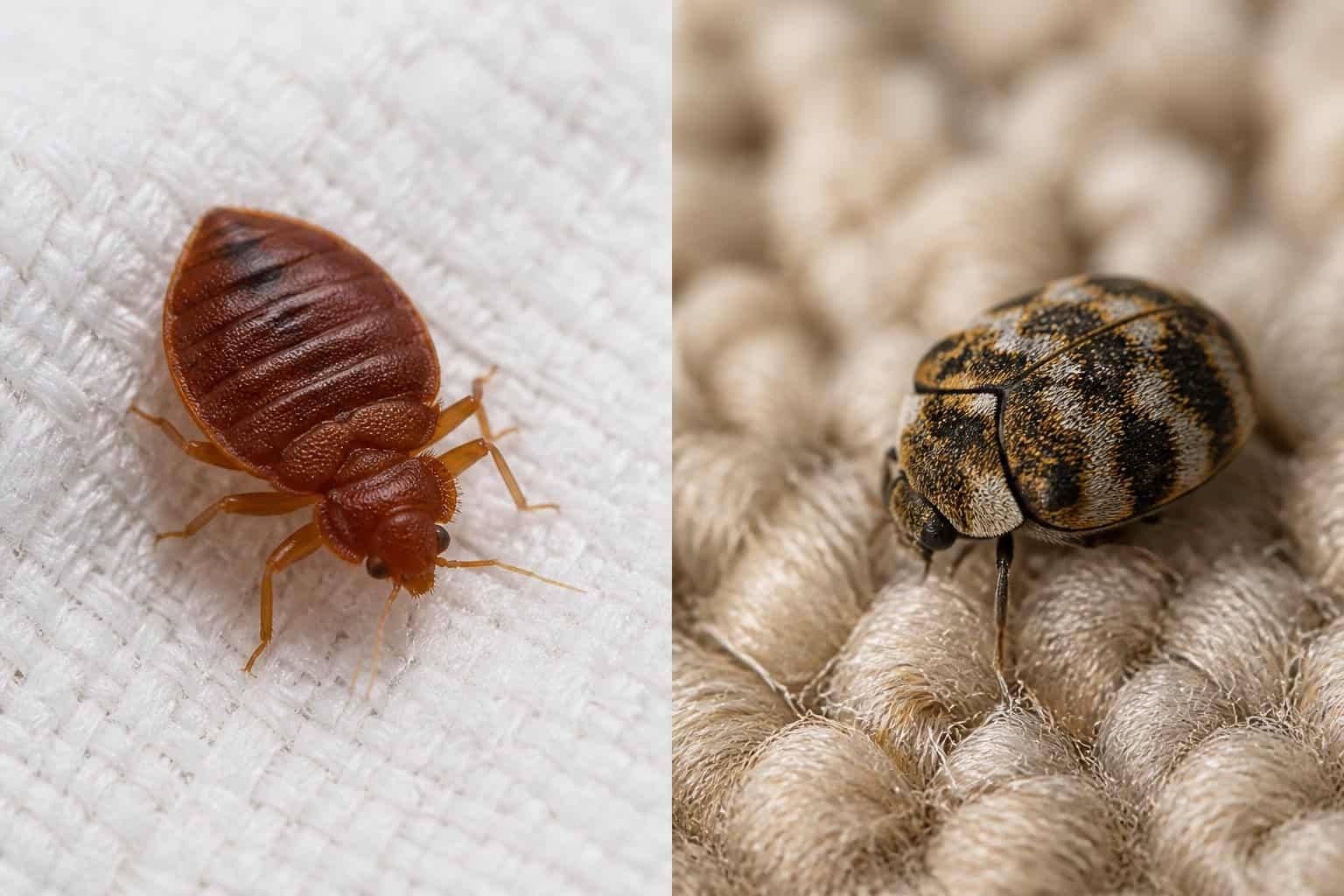
How To Identify The Bug Fast
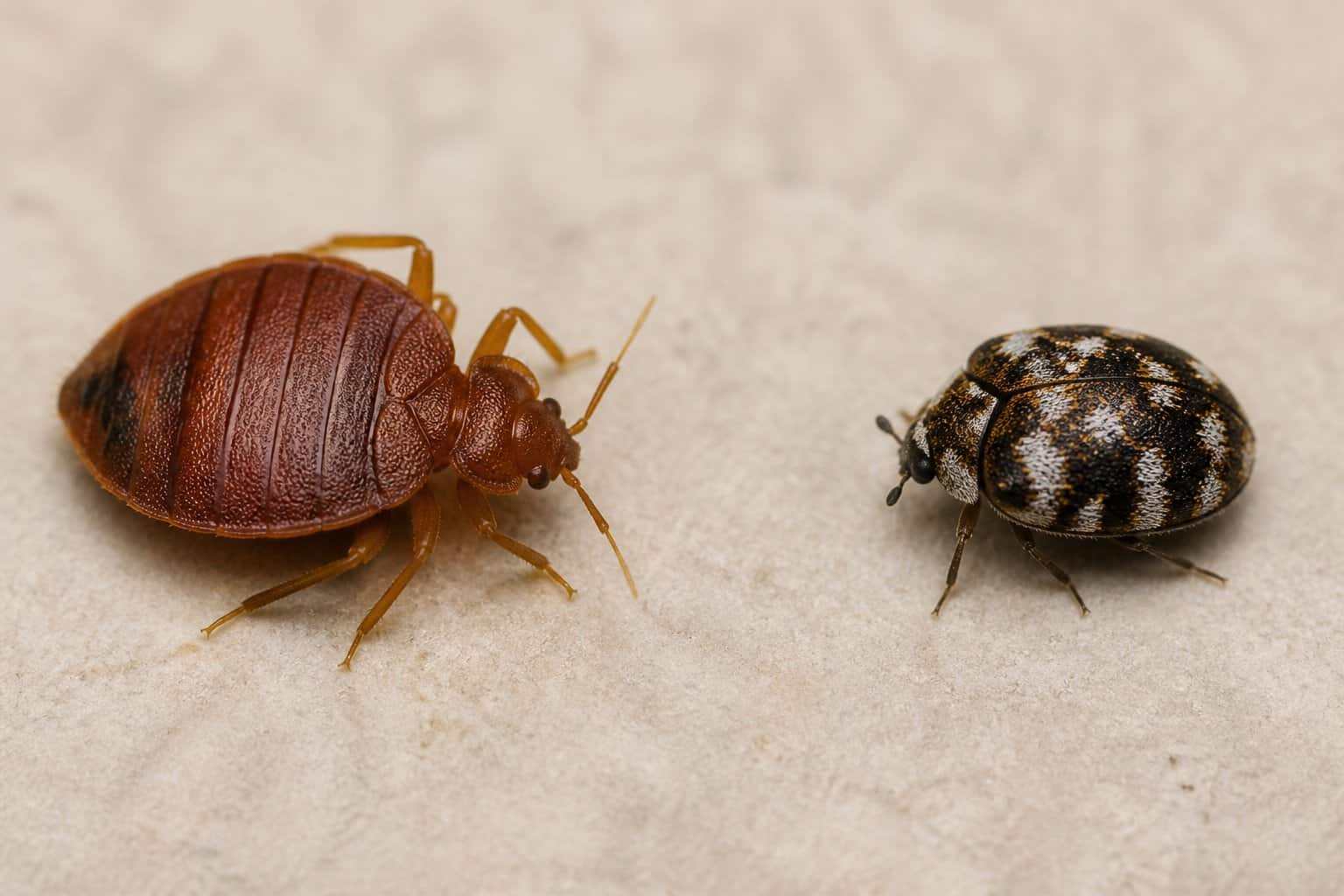
Start with shape, color, and size to identify the bug quickly. If you spot an immature stage, check that as well, since a carpet beetle and a bed bug can look similar at a glance.
Their bodies and feeding habits are very different.
Body Shape, Color, And Size
An adult bed bug looks flat, oval, and reddish-brown, with a shape often compared to a swollen apple seed.
A carpet beetle is usually smaller, more rounded or oval, and may have black, brown, white, yellow, or orange patterning, depending on the species.
Bed bugs belong to the Cimicidae family and feed on blood. Carpet beetles are scavengers and look more like tiny beetles than flattened blood feeders.
Carpet Beetle Larvae Vs Bed Bug Nymphs
Carpet beetle larvae look fuzzy or bristly, often carrot-shaped, and can be easy to mistake for something else if you do not look closely.
Bed bug nymphs look smoother, paler, and shaped like miniature adults.
That fuzziness is a major clue. If you find a bristly larva near lint, pet hair, or fabric debris, you are likely dealing with carpet beetles.
Do Carpet Beetles Bite Or Just Cause Irritation
People often ask if carpet beetles bite. They usually do not.
What many people call carpet beetle bites are often skin irritation caused by hairs from carpet beetle larvae. Bed bug bites come from actual feeding.
Bed bug bites may show up in clusters or lines, while carpet beetle reactions can be more like a rash.
If you are comparing carpet beetle bites and bed bug bites, inspect the home as well, not just the skin.
Signs In Your Home That Point To Each Pest
The strongest clues come from the evidence left around your home, not from bites alone.
Bed bugs and carpet beetles leave different calling cards in bedding, fabric, storage, and hidden edges.
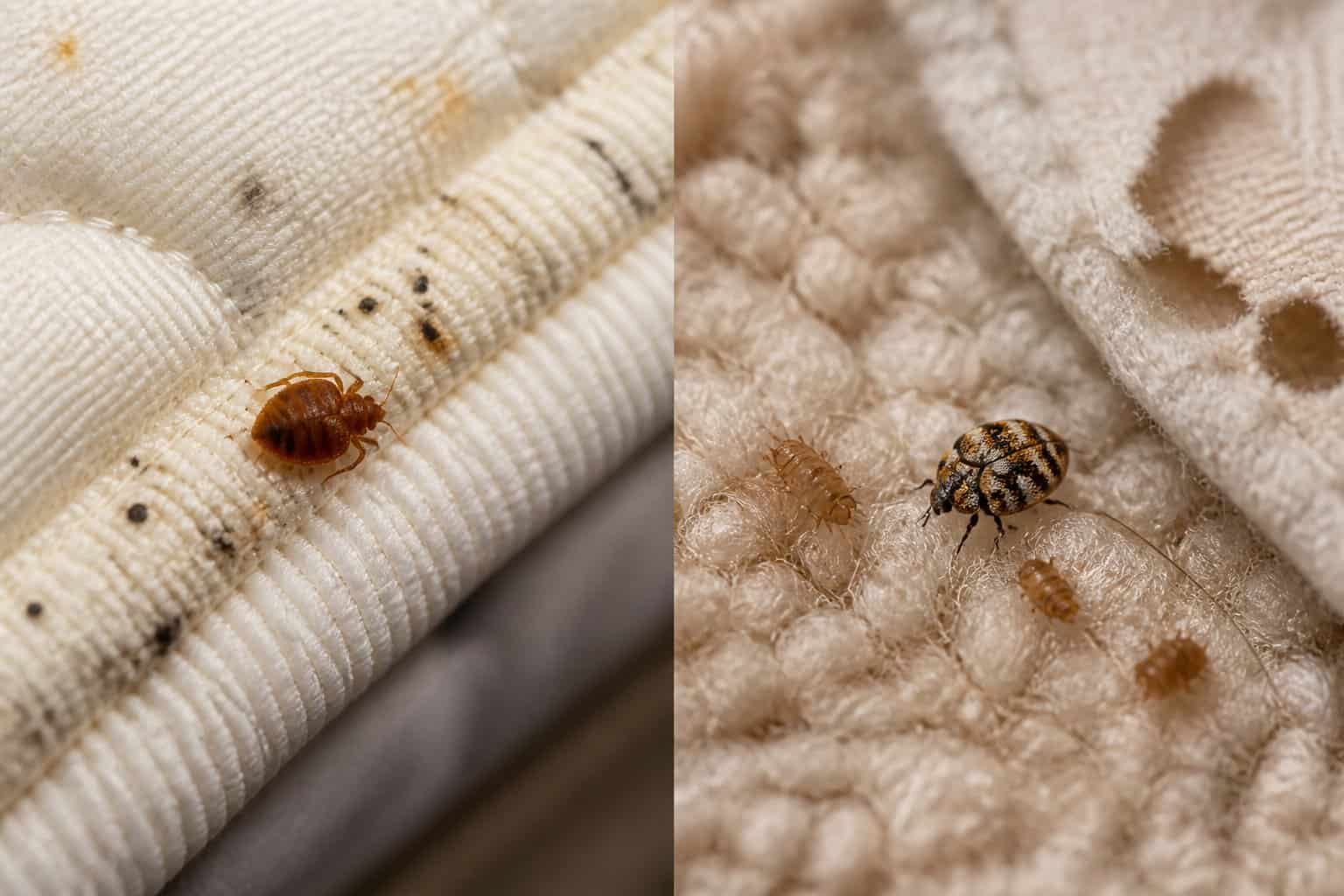
Blood Spots, Fecal Spots, And Other Bed Evidence
Bed bugs often leave blood stains, blood spots on sheets, and fecal spots near mattress seams, box springs, and headboards.
These signs often build up around bed bug hiding spots.
Dark specks on seams or tufts deserve a close look. If the marks cluster near where you sleep, bed bugs are more likely than carpet beetles.
Fabric Damage, Shed Skins, And Beetle Clues
Carpet beetles often leave irregular fabric damage, shed skins, and worn spots on natural fabrics.
You may also notice damage in wool, upholstery, or stored clothing.
Adult beetles near windows can be another clue, since they may wander toward light.
That pattern points more toward a fabric pest than a blood feeder.
Where To Inspect First Around Sleeping And Storage Areas
Start with mattress seams, box springs, and headboards if you suspect bed bugs.
Check closets, under furniture, carpet edges, and storage areas if you suspect carpet beetles.
Look where lint, pet hair, and fabric scraps collect.
Those spots often reveal the first clear difference between bed bugs and carpet beetles.
What To Do Next For Removal And Prevention
The next step depends on whether you are dealing with a blood-feeding pest or a fabric feeder.
Bed bug treatment and carpet beetle treatment use different tools, and the right plan can save you from repeated problems.
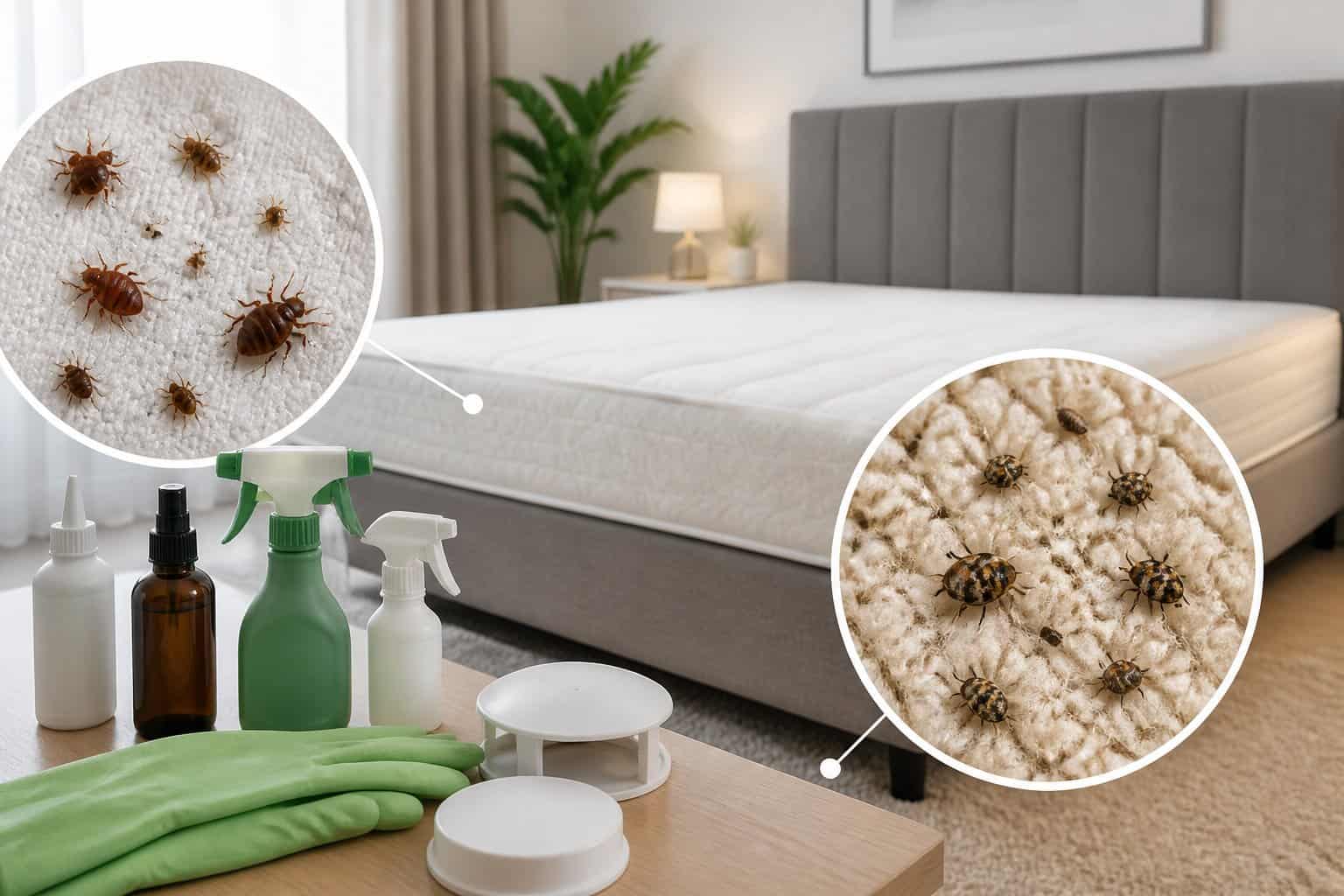
When DIY Makes Sense And When To Call A Pro
DIY can make sense for a small carpet beetle problem if you can remove the food source, vacuum thoroughly, and clean stored fabrics.
For bed bug infestations, pest control often works better because the insects hide deeply and spread into cracks and furniture.
Call professional pest control if you keep seeing signs after cleaning or cannot confirm which pest you have.
A company like Better Termite may be a good fit when you need targeted help.
Treatment Options For Sleeping Areas And Fabrics
For bed bug treatment, wash and dry bedding on high heat, use mattress encasements, and reduce clutter around sleeping areas.
Heat treatment can also be effective when a trained professional does it correctly.
For treating carpet beetles, focus on vacuuming carpets, rugs, closets, baseboards, and upholstered furniture. Then wash or dry-clean affected textiles.
The University of Maryland Extension recommends targeting lint, pet hair, and stored natural fibers to stop the cycle.
Prevention Steps To Stop A Repeat Problem
Inspect secondhand furniture, keep luggage off beds, and watch for signs after travel to prevent bed bugs.
Clean regularly, seal seasonal clothing, and store natural fabrics in closed containers to prevent carpet beetles.
Check windows, closets, and under furniture.
Regular cleaning and quick inspections help prevent bed bug and carpet beetle infestations from returning.


