
You might expect a simple yes or no, but honestly, the truth about seahorse intelligence is a bit more nuanced. Seahorses pull off some surprisingly smart behaviors—camouflage, careful hunting, and being picky about mates—but it’s not really fair (or helpful) to measure their brains against mammals or birds. Let’s dig into what makes them tick and why their habits matter.
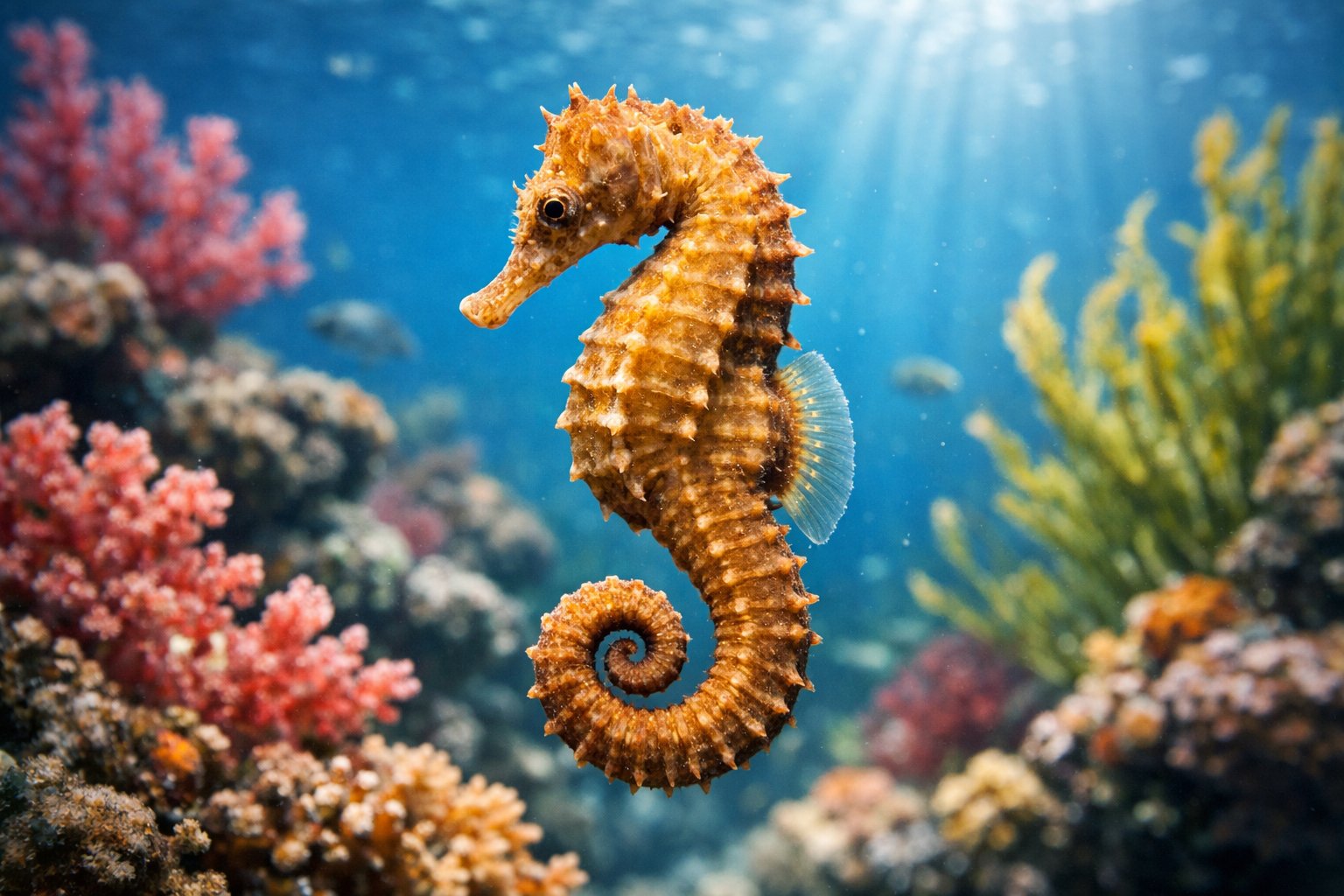
We’ll look at how seahorse biology shapes their thinking and survival. Some of their actions actually seem pretty clever in the underwater world.
Expect to see clear examples of hunting, hiding, and mating. These show off practical smarts rather than anything like human logic.
Exploring Seahorse Intelligence

Seahorses learn, remember, socialize, and even pull off intricate mating routines. You can watch captive-bred seahorses recognize feeding times, form pair bonds, and perform long, repeated courtship dances that hint at memory and social awareness.
Learning and Memory in Seahorses
You can train seahorses to show up at the same spot for food every day. Captive-bred ones catch on to routines and visual cues pretty quickly.
They watch their keeper approach, remember where the food appears, and sometimes change color right on cue. That’s associative learning—linking a hand wave or a light with food.
Their brains are nothing like a mammal’s, but the hippocampus (named after seahorses, oddly enough) reminds us that memory matters for all kinds of animals. Researchers studying Syngnathidae (the family with seahorses) focus on behavior, not IQ tests.
Repeated feeding, target training, and remembering things across days show both short- and long-term memory. Learning changes depending on the species, age, and environment.
Wild seahorses might rely more on camouflage and local cues, while captive-bred ones exposed to regular routines often show clearer learning responses.
Social Interactions and Communication
Seahorses act differently when others join their tank. They form loose groups and, sometimes, even hierarchies.
Captive-bred seahorses might greet a familiar tankmate or keeper, flash colors, and swim little patterns near the glass. Communication happens through color changes, body posture, and brief synchronized moves.
These signals help maintain pair bonds and keep fights to a minimum. Project Seahorse and others have shown that social context affects stress, feeding, and breeding success.
You’ll see more courtship and less aggression in stable groups. Visual cues matter most because seahorses rely on their eyesight.
They don’t really use sound like a lot of fish. Instead, they depend on sight and touch when they’re up close, especially for feeding and mating.
Courtship and Complex Mating Rituals
Seahorse pairs put on multi-day courtship shows that are honestly pretty impressive. They’ll dance, change colors, entwine tails, and swim together in sync.
These rituals can go on for minutes or hours and usually repeat each morning. Courtship helps the pair sync up for egg transfer and boosts breeding success.
Males develop a brood pouch for the eggs, while females pick their mate through displays and persistence. In many Syngnathidae species, this male pregnancy adds a twist to mate choice and bonding.
Project Seahorse has found that stable pairs and ritualized courtship help offspring survive, both in the wild and in captivity. If you keep seahorses, giving them visual space, regular feeding, and good tankmates really helps these behaviors shine.
Biology and Survival Strategies of Seahorses
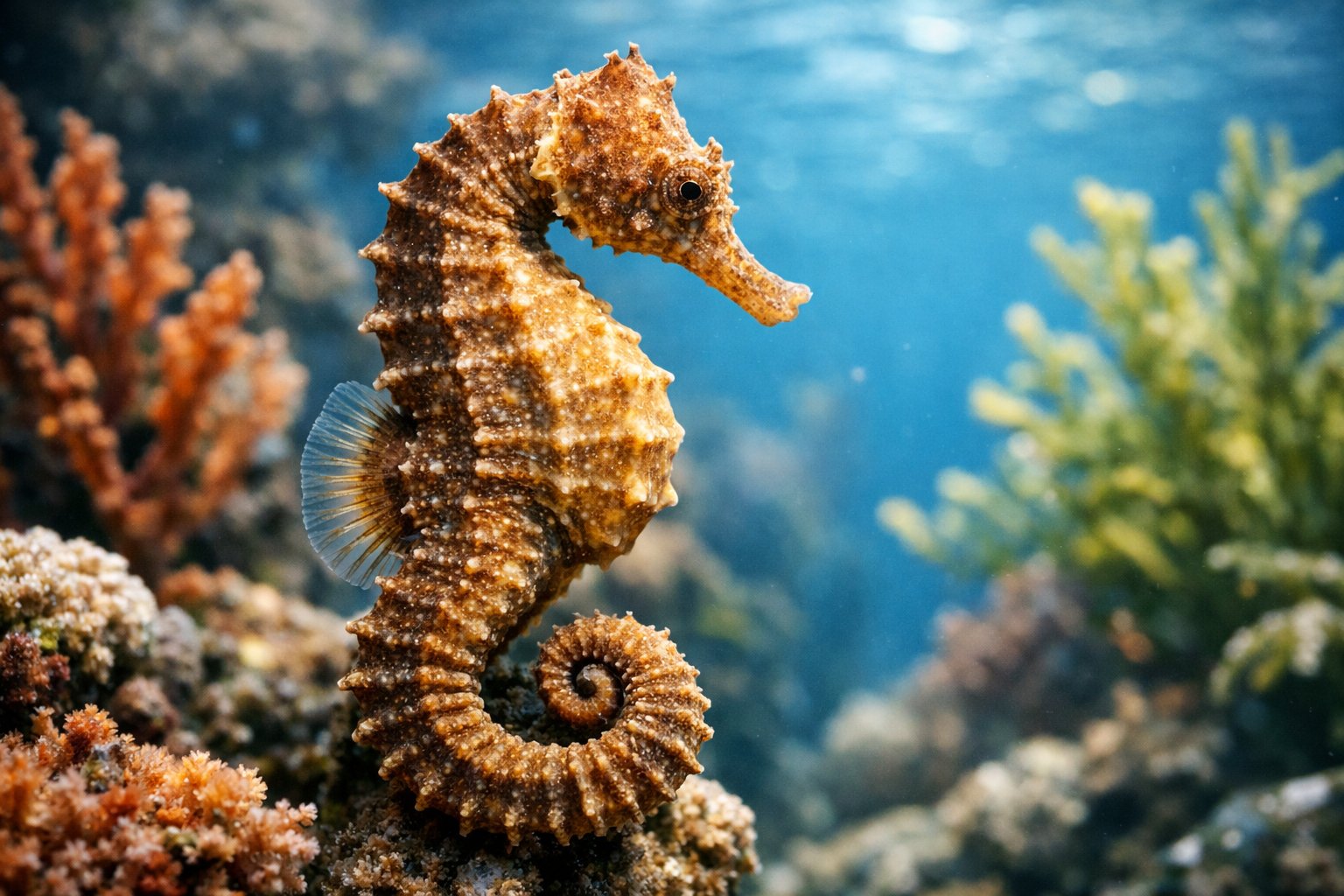
Seahorses rely on unique body parts and behaviors to hide, hunt, and reproduce. Their bony armor, grabby tails, and slow swimming fit their sit-and-wait lifestyle in shallow places like seagrass beds and coral reefs.
Camouflage and Adaptability
Seahorses blend right in with their surroundings by changing color and growing little skin filaments. Many species match seagrass, coral, or sponges to dodge predators.
The pygmy seahorse Hippocampus bargibanti is a wild example—it lives on specific gorgonian corals and looks almost identical to them. Their bodies have bony plates instead of scales, which gives them armor but not much flexibility.
You’ll see their tails gripping seagrass or coral. This prehensile tail anchors them in currents and saves energy.
Some species, like the spiny seahorse, have extra spines for even better camouflage. Their close relatives, pipefish and seadragons, share these camouflage and armor tricks.
Hunting and Feeding Habits
Seahorses hunt by staying still and waiting for tiny crustaceans to come close. When the time’s right, they use rapid suction with their snout to slurp up prey.
They don’t have teeth or stomachs, so they need to eat often to keep up their energy. A small dorsal fin helps them move, and pectoral fins near the head let them steer.
Swimming takes effort, so they usually anchor themselves to save energy. Diets depend on species and size—dwarf seahorses eat copepods and shrimp larvae, while bigger ones like Hippocampus ingens go for larger prey.
How they hunt and the shape of their mouth decides what they eat.
Unique Reproduction and Male Pregnancy
Seahorse reproduction flips the usual script: males carry the eggs in a brood pouch. During mating, the female deposits eggs into the male’s pouch, where he fertilizes and protects them until they’re ready.
Male pregnancy means females can make more eggs sooner, so the pair can have more offspring. Brood size varies a lot.
Small species might release just a few dozen fry, while big ones like Hippocampus ingens can release thousands. After birth, the tiny newborns (fry) are on their own.
Some seahorses form monogamous pairs and do daily courtship dances to keep the bond strong. The brood pouch also controls salinity and oxygen, making sure embryos develop well.
Habitat, Conservation, and Threats
Seahorses stick to coastal habitats—think seagrass beds, mangroves, estuaries, and coral reefs.
Some species, like the Knysna seahorse and a few Hippocampus types, really rely on their local environments. When those spots get damaged, these seahorses take the hit.
Habitat loss, pollution, and bycatch from fishing all threaten them. Many seahorse populations keep dropping, and a few have landed on threatened species lists.
Captive breeding programs offer some hope for wild populations. Still, keeping seahorses happy and healthy in aquariums? That’s a challenge.
If you’re wondering how to help, supporting efforts to protect seagrass and mangrove habitats or working to reduce bycatch makes a difference. Want to dig deeper? Check out conservation studies, like this review on warming impacts and long-term threats: https://pmc.ncbi.nlm.nih.gov/articles/PMC4778478/.


