
You might find it surprising, but polar bears actually reached the land we now call Scotland—though they’re definitely not native anymore. No wild polar bears roam Scotland today; any remains come from the Ice Age or from animals kept in zoos.

Stick around to see how ancient climate shifts and changing coastlines brought Arctic bears to Scottish shores, how long ago they showed up, and why people still bring up bears in Scotland now.
We’ll also get into vanished brown bears, their role in folklore, and where you can actually spot bears in Scotland nowadays.
Are Polar Bears Native to Scotland?
Scotland holds ancient evidence that polar bears once reached its lands, but you won’t find wild polar bears there now. One key fossil, some captive bears, and the obvious differences from brown bears help explain the story.
Prehistoric Evidence of Polar Bears in Scotland
The Inchnadamph Bone Caves up in the Highlands hold the clearest proof. Archaeologists found bear bones and teeth there, and after a closer look, these matched polar bear traits, not brown bear ones.
Scientists date these remains to the last Ice Age, somewhere between 30,000 and 50,000 years ago.
Those bears ate mostly seafood, based on what scientists found in the bones. That diet fits polar bears way more than brown bears, which eat a bit of everything.
Polar bears reached Scotland when sea ice stretched much farther south, letting them travel over ice or swim from the Arctic.
This is really the only strong fossil proof of polar bears in Britain. Researchers keep testing DNA to figure out if polar and brown bears mixed back then.
Polar Bears at Highland Wildlife Park
You can see living polar bears in Scotland, but only in zoos. The Royal Zoological Society of Scotland keeps polar bears at the Highland Wildlife Park in the Cairngorms.
They keep these animals for conservation, research, and education—not because they’re from a wild Scottish population.
The park gives them Arctic-style enclosures, proper vet care, and diets that suit polar bears. You might spot them swimming or hunting for food, but you won’t catch a wild polar bear wandering the Scottish coast.
If you’re curious about polar bears, the park’s your best bet. They also help out with bigger conservation efforts for the species.
Comparison to Eurasian Brown Bears
Brown bears—sometimes called Eurasian or European brown bears—actually called Scotland home until the Middle Ages. They look and act pretty different from polar bears.
Brown bears eat plants, berries, and meat. Polar bears mostly stick to marine mammals and seafood.
Brown bear bones and historical records show they lived in Scotland until maybe the 5th to 9th centuries AD. People hunted them and took over their habitat, which pushed them out.
Polar bears, on the other hand, only made a brief appearance during the Ice Age, when it was much colder.
When you compare skulls, teeth, and bone chemistry, the Inchnadamph finds match polar bears more than brown bears. That’s why scientists treat their stories in Scotland as totally separate.
Bears in Scotland: Extinction, Cultural Legacy, and Modern Wildlife
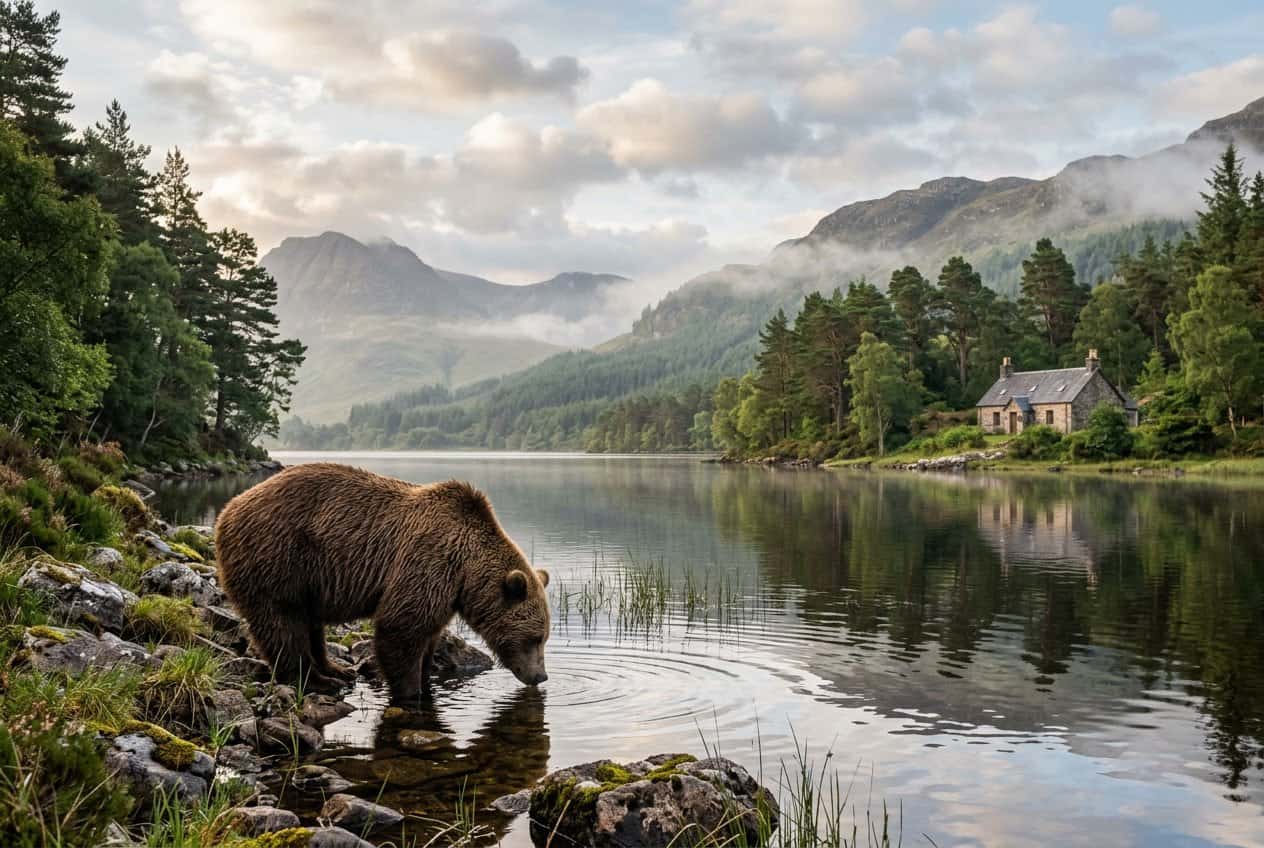
Bears once roamed across Scotland and left their mark on art, place names, and even bones hidden in caves. Today, wild bears are gone, but you can still find their remains in museums or see live bears in parks.
Timeline of Bear Extinction in Scotland
Bears lived in Scotland from the last Ice Age right up to medieval times. The Eurasian brown bear (or European brown bear) probably survived on the islands and mainland until about a thousand years ago.
Hunting, loss of forests, and growing human settlements pushed bears into the wildest parts of the Highlands and islands.
By the 13th to 15th centuries, written records and place names suggest bears had become rare. After that, sightings stopped, and bears disappeared from the wild.
Bones uncovered in places like the Inchnadamph Bone Caves show they’d been around much earlier, but it was people who finally drove them out.
Historic Bear Species and Their Impact
The main species here was the Eurasian brown bear. These big omnivores shaped the ecosystem by eating plants, fish, and scavenging carcasses.
Some Scottish place names—especially those with “bear” in old Gaelic or Scots—hint at how people and bears crossed paths.
Fossil finds from Inchnadamph and elsewhere have also sparked questions about whether polar or polar-like bears lived here during the Ice Age.
Scientists found bear bones with signs of a marine diet, which could mean polar bears or maybe brown bears that adapted to the cold. These discoveries change how we see Scotland’s ancient wildlife.
Current Sites to See Bears in Scotland
You can’t find wild bears in Scotland now. If you want to see bears, you’ll need to visit wildlife parks or museums.
National Museums Scotland and some local museums display bear bones and skulls from digs, including pieces linked to the Inchnadamph caves.
Wildlife parks and zoos keep living bears, like brown bears and others. These places let you get up close and learn about bear biology or conservation.
If you’re interested in old remains, check out museum schedules or research news from university teams working on Scottish bear fossils.
Debate on Bear Reintroduction
People keep debating whether Scotland should bring back brown bears. Supporters say bears could help restore lost ecological roles and maybe even give ecotourism a boost.
They often point to other rewilding projects in Europe, where big carnivores have made a comeback in parts of their old range. It sounds promising, but is it really that simple?
On the other hand, plenty of folks worry about safety. Livestock losses and the cost of


