
You’ve probably heard folks say humans share a lot of DNA with pigs, especially when it comes to organs and some body functions. That’s a bit wild, isn’t it? But if you’re wondering which animal we’re actually closer to, the answer’s pretty obvious—humans are way closer to chimpanzees.

Humans share about 98-99% of their DNA with chimps, making them our closest living relatives. We split from a common ancestor with chimps just a few million years ago. In evolutionary terms, that’s hardly any time at all.
Pigs, though, sit much farther out on our family tree. There’s way less genetic overlap there.
If you’re curious about why this matters or what exactly makes chimps so similar to us, keep reading. You’ll see why our genetic ties to chimps say more about who we are than those weird connections to pigs. For extra details, check out this page on humans and chimps.
Are Humans Genetically Closer to Chimps or Pigs?
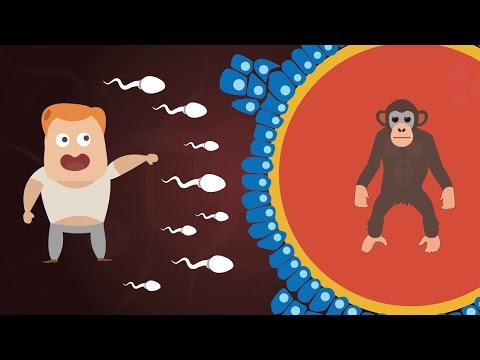
When you look at DNA, humans share a lot more with chimpanzees than with pigs. Our genes, body functions, and evolution connect us much more closely to chimps.
But pigs do have some interesting similarities, especially in biology and medicine. They pop up in research for good reason.
Genetic Similarity with Chimps
You share about 99% of your DNA with chimpanzees and bonobos. That tiny difference comes from small changes in DNA over millions of years.
Humans and chimps last shared a common ancestor roughly 7 million years ago.
Because of this close link, we see a lot of similar traits. Our brain structure, body shape, and even some behaviors overlap with chimps.
Researchers often study chimps to learn about human evolution. The strong genetic connection makes them a natural choice.
Even though there are just small changes in our DNA compared to chimps, those tweaks still lead to big differences in intelligence and behavior. This closeness in DNA makes chimps our closest living relatives.
If you want to get into the nitty gritty, here’s an article on human and chimp DNA similarity.
DNA Comparison with Pigs
Humans and pigs share about 84% similarity in their coding genes. A lot of basic genes, like those for organ development, are pretty similar.
But pigs and humans split from a common ancestor much longer ago—about 80 million years ago.
Compared to chimps, pigs are just genetically more distant. Their DNA sequences differ a lot more, so they aren’t close relatives.
Still, some pig organs are about the same size and work in similar ways to ours. That’s why medical researchers use pigs a lot, especially for organ transplants.
Even though pigs share fewer genetic traits with us, that overlap shows basic life functions need a bunch of shared genes. If you’re interested, you can read more about genetic similarity between humans and pigs.
Physical and Biological Differences
Chimps share our brain size and limb structure. Pigs, though, have some physical traits that look surprisingly like ours.
For example, humans and pigs can have similar skin and hair follicle setups. Our internal organs—hearts and kidneys—can look a lot like pig organs, at least in structure.
But chimps are closer to us when it comes to overall body shape and brain complexity. These differences come from our evolutionary paths. Chimps evolved more recently from a common ancestor with us than pigs did.
Here’s a quick comparison:
- Chimpanzees: ~99% DNA similarity, brain and body closely matched
- Pigs: ~84% DNA similarity, some organ and skin traits similar
So, chimps are our closest genetic relatives. But pigs do have some biological overlaps worth noticing. If you want more, check out this article on humans and pigs vs. chimps.
Exploring Evolutionary Relationships

Humans share more DNA and a more recent ancestor with chimpanzees than with pigs.
Some people toss around ideas that human traits come from a mix between chimps and pigs, but there’s just not any solid evidence for that. Knowing our real evolutionary family tree helps clear up these odd claims.
Common Ancestors of Humans and Apes
You share about 98-99% of your DNA with chimpanzees. That’s because our last common ancestor lived just 5 to 7 million years ago.
That ancestor led to both our species and chimps.
Many genes for brain growth, social behavior, and immunity are almost the same in us and chimps. That’s a big reason why both species have complex social lives and can solve problems.
Our bodies are built to walk upright, though, while chimps have arms designed for climbing.
By contrast, our common ancestor with pigs lived about 80 million years ago. That’s a huge gap.
So, our DNA similarities with pigs—about 84%—mostly cover basic organ functions, not behavior or brain power. If you want more, here’s a page about humans’ genetic ties to chimps and pigs.
| Feature | Humans & Chimps | Humans & Pigs |
|---|---|---|
| DNA similarity | 98-99% | Around 84% |
| Last common ancestor | 5-7 million years ago | About 80 million years ago |
| Brain size | Large relative to body | Smaller relative |
| Walking stance | Bipedal | Quadrupedal |
Controversial Hybrid Theories
Some folks claim humans are a weird mix of chimps and pigs, mostly because of certain physical traits like how our fat sits on the body.
But honestly, nobody’s found any genetic proof that backs this up.
Scientists have dug deep into human, chimp, and pig DNA. They didn’t spot any signs of hybridization in our evolutionary history.
If you notice similarities between us and pigs, it’s probably just convergent evolution at work—different animals ending up with similar features because they deal with the same problems.
Doctors and researchers often use pig organs in medical studies since they work a lot like human ones. Still, that doesn’t mean we’re closely related.
If you’re curious, you can check out more about why the chimp-pig hybrid theory falls apart here.


