
Ever spotted a tiny striped critter darting across your yard and wondered if it’s just a small squirrel? You’re definitely not alone.
Chipmunks and squirrels might look similar and belong to the same family, but they’re not the same animal. Chipmunks actually fall under the squirrel category, though they’re smaller and sport those signature stripes on their faces and backs—something most squirrels just don’t have.
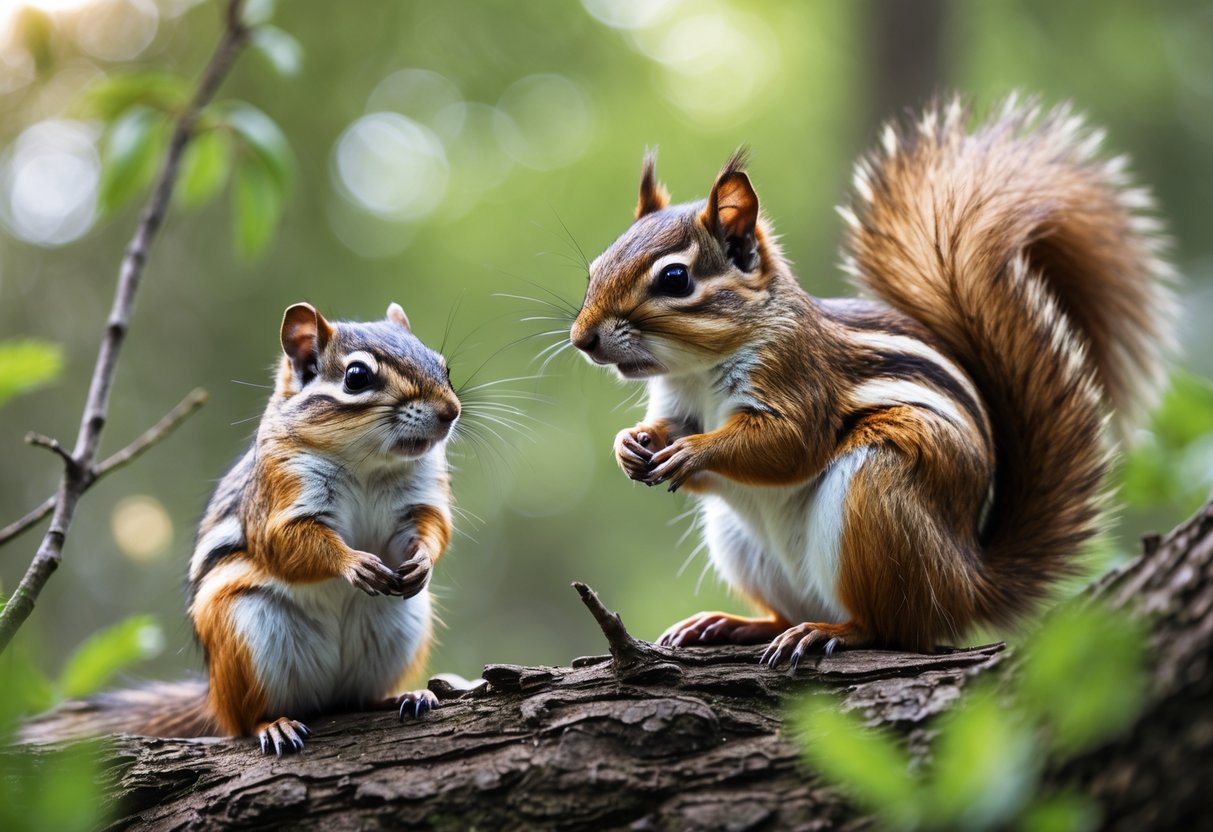
You’ll probably notice their size first—chipmunks barely hit four ounces, which is way lighter than your average squirrel. Chipmunks dig burrows underground, while squirrels usually build their nests up in trees.
These differences aren’t just about looks or where they live. They even shape what they eat and how they find food.
Want to get into the nitty-gritty of how chipmunks and squirrels compare in looks, habits, and homes? Keep reading. Knowing these details can help you figure out who’s visiting your yard and what they’re up to. If you’re curious for more, there’s a detailed comparison you can check out.
Are Chipmunks and Squirrels the Same Animal?

Chipmunks and squirrels are related, but they’re not exactly the same. Both belong to the rodent family, yet they differ in size, appearance, and behavior.
You’ll spot differences in their classification, physical features, and even the sounds they make.
Classification Within the Sciuridae Family
Chipmunks and squirrels both sit in the Sciuridae family, which also includes ground squirrels and flying squirrels. Chipmunks fit into the Tamias genus, making them a special type of squirrel.
There are 268 squirrel species, and chipmunks make up just one group. Tree squirrels, like the eastern gray squirrel, stick to the trees. Chipmunks and ground squirrels usually stick closer to the ground or even live underground.
You can think of chipmunks as close cousins to ground squirrels. They share things like burrows and cheek pouches for carrying food. Still, they differ from the 122 species of tree squirrels out there.
Physical Differences Between Chipmunks and Squirrels
Chipmunks run smaller than most squirrels. You’ll see stripes down their backs and faces. Most tree squirrels, like the eastern gray, don’t have stripes and are much bigger.
Squirrels can get pretty large and rock those bushy tails. Chipmunks have shorter tails and look a bit more compact. You’ll notice chipmunks weigh less and have a body built for quick moves on the ground.
Key physical traits:
- Chipmunks: Small, striped, short tail
- Squirrels: Bigger, no stripes, bushy tail
These features make it easier to tell them apart, especially if you catch them in your yard or at the park.
Differences in Behavior and Vocalizations
You’ll usually find chipmunks on the ground, busy collecting food or digging burrows. They don’t climb trees as much as squirrels do.
Squirrels, especially tree squirrels, spend a ton of time up in the trees and build their nests there. Chipmunks don’t hibernate, but they do go through periods of rest. Many ground squirrels hibernate during winter.
Their sounds are different, too. Chipmunks make quick, high-pitched calls to warn about nearby predators. Squirrels often chatter or bark, especially when they’re feeling threatened.
Knowing these differences helps you figure out which animal you’re watching—or hearing—and what to expect from them.
Understanding Chipmunk Species and Distribution

Chipmunks belong to a group of small, striped squirrels mostly found in North America. Depending on where each species lives, you’ll notice differences in size, stripes, and behavior.
Some types pop up more in eastern states, while others stick to the west or even parts of Asia.
Eastern Chipmunk vs Western Chipmunks
The Eastern chipmunk stands out as one of the most familiar types. It usually measures about 9 to 10 inches long, tail included.
You can spot it by five dark stripes on its back, separated by lighter ones. These chipmunks call the eastern U.S. and parts of Canada home. They like forests, parks, and sometimes even suburban spots.
Western chipmunks include several species that live all over the western U.S. and Canada. They’re a bit smaller and have different stripe patterns.
For example, the Yellow-pine chipmunk shows off bolder, narrower stripes compared to the Eastern chipmunk. Like their eastern cousins, western chipmunks live on the ground and in shrubs, but you’ll find them more often in mountainous or dry regions.
Unique Features of the Least Chipmunk
The least chipmunk is the tiniest chipmunk species in North America. It measures about 4 to 7 inches long, not counting the tail.
Its stripes are really distinct and dark, running along its back and sides. This chipmunk prefers the northern states and western Canada.
You’ll mostly find it in open woodlands or near rocky spots. One cool thing about the least chipmunk is how fast it moves.
It can dart through underbrush in a flash, and its striped pattern helps it blend into leafy forest floors. This species also does a great job storing food in its cheek pouches to carry back to its burrow.
Siberian Chipmunk and Worldwide Range
Most chipmunks call North America home, but the Siberian chipmunk? It’s native to Asia, especially Russia and some parts of northern China.
It kind of looks like its North American cousins, just a bit bigger and with fur that’s got a reddish tint. People have spotted Siberian chipmunks in parks and gardens around Europe, since folks introduced them there.
This species handles different environments pretty well. Forests, cities, backyards—it seems to make itself at home almost anywhere.
Its range goes way beyond what you’d expect from the chipmunks you see in the U.S. If you ever visit South Korea or Japan, you might catch a glimpse of one running wild.
Curious about how chipmunks and squirrels compare, or where they actually live? You might want to check out this detailed article on chipmunk vs. squirrel species and habitats.


