
When you think about bobcats and house cats, you might picture two similar furry friends. However, bobcats are not the same as house cats; they are wild animals with different behaviors and lifestyles. While both belong to the feline family, they have distinct differences that set them apart.
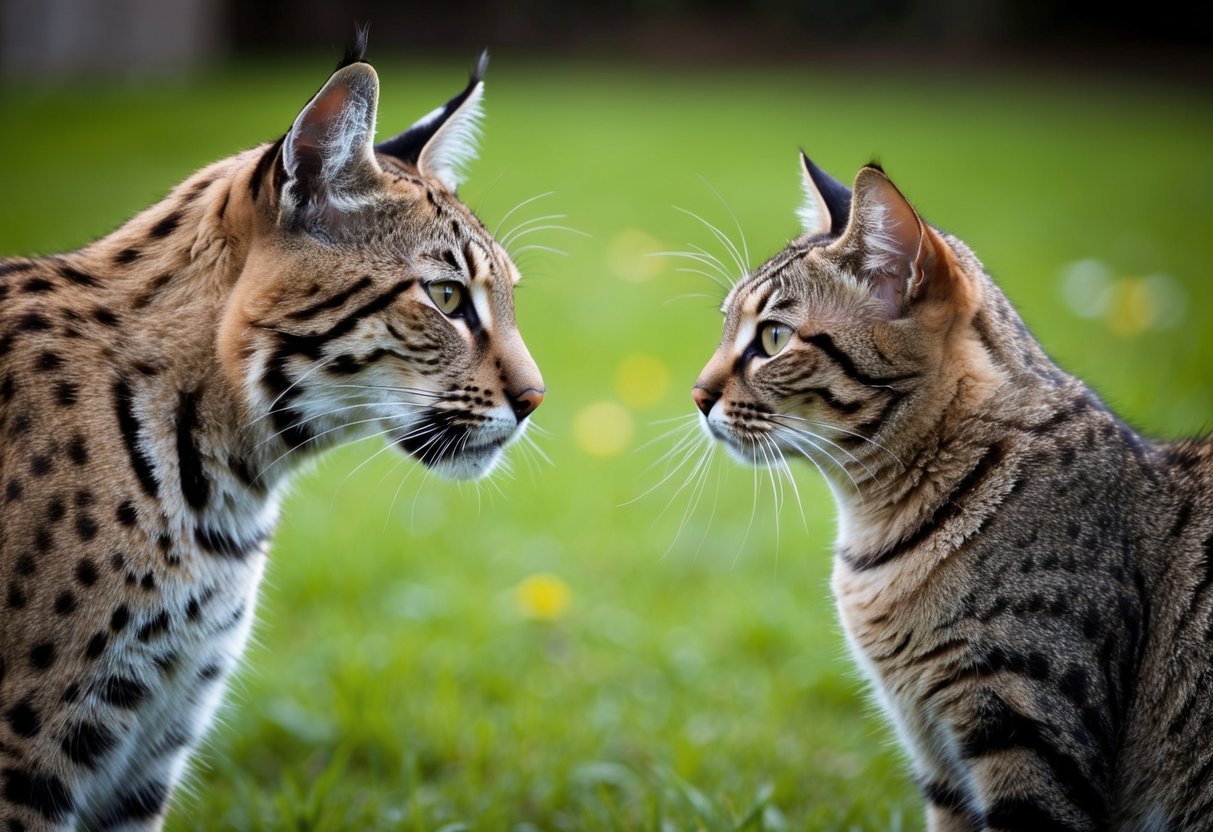
Bobcats are larger, have unique markings, and live in the wild. They are skilled hunters and are not domesticated like the cats you may have curled up on your couch. In contrast, house cats have been bred over many generations to be comfortable around humans and adapt to home life.
If you’re curious about how these fascinating creatures compare, stick around! You’ll learn more about their similarities and differences, shedding light on why bobcats are not just oversized house cats.
Understanding Bobcats and House Cats

Bobcats and house cats may seem similar at first glance, but they have several key differences. By comparing their physical traits, species classifications, and behaviors, you can better appreciate what sets them apart.
Physical Traits and Appearance
Bobcats are larger than house cats. They typically weigh between 15-35 pounds, while house cats usually weigh about 5-10 pounds.
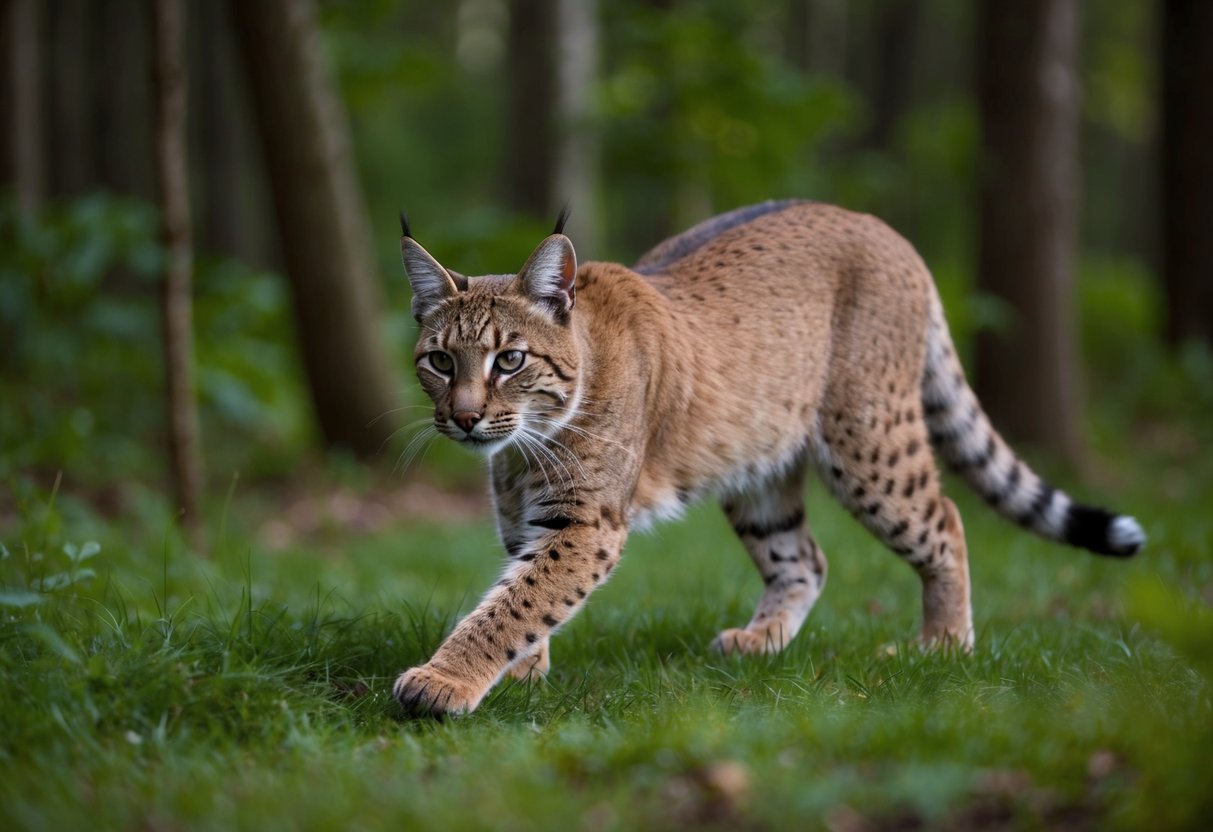
In terms of appearance, bobcats have distinctive spotted coats that help them blend into their surroundings. Their fur often features browns and tans with darker spots. House cats, however, have a wider variety of coat patterns, including solids, stripes, and spotted designs.
Bobcats have short tails measuring around 4-7 inches, while house cats usually have tails ranging from 8-12 inches. Their ears are also more prominent, standing upright with tufts at the tips. House cat ears are smaller and rounded. Additionally, bobcats have cheek ruffs that are less common in house cats, adding to their wild appearance.
Species and Taxonomy
Bobcats belong to the species Lynx rufus, while house cats are classified as Felis catus. Both fall under the larger Felidae family, which includes all cats, both wild and domestic.
While they share a common ancestor, bobcats and house cats have evolved separately. This leads to differences in their physical traits and behaviors. Bobcats are more closely related to larger felines. Some people may confuse them with the Canada lynx, but the two species are distinct.
Understanding their classification helps clarify how they relate to other cats. Bobcats are part of the lynx group, known for their tufted ears and shorter tails, which differentiate them from other members of the Felidae family.
Behavioral Characteristics
Bobcats and house cats have different behavioral traits, largely due to their environments. Bobcats are typically skilled hunters, relying on their stealth and agility. They often hunt alone and prefer prey like rabbits and rodents. They tend to be more solitary and territorial compared to house cats.
House cats are more social creatures. They enjoy companionship and can often be found in groups. Their nocturnal behavior makes them active during the night, but they also adapt to human schedules.
In terms of communication, bobcats use various sounds, like growls and yowls, to establish territory. House cats often meow and purr to communicate with humans. Understanding these behaviors can help you appreciate the differences between these two fascinating animals.
Habitats and Lifestyle
Bobcats and house cats have distinct habitats and lifestyle choices. Understanding their environments, diets, and behaviors can help you appreciate the differences and similarities between these fascinating felines.
Natural Habitats and Adaptations
Bobcats thrive in diverse environments across North America. They can be found in forests, mountains, deserts, and even swamps. This adaptability helps them find shelter and hunt effectively.
House cats, on the other hand, have a more flexible habitat range. They live in urban areas, rural settings, and homes. Their ability to adapt to human environments makes them one of the most common pets worldwide. Both types of cats use similar methods to make their homes cozy, like finding small spaces to hide or rest.
Diet and Prey
As carnivores, bobcats primarily hunt for their food. Their diet includes rabbits, birds, and small rodents. With their strong senses, they can stalk and ambush their prey effectively. Bobcats need to consume around 1 to 2 pounds of meat daily to meet their nutritional needs.
House cats also need a meat-based diet. They often eat commercial cat food, which is designed to meet their dietary needs. You might find them chasing small insects or exploring their surroundings for snacks. Unlike bobcats, house cats depend on humans for their food, making their diet more consistent and less varied.
Domestication vs. Wild Behavior
Bobcats remain wild animals, and their behavior reflects this. They develop survival skills that help them navigate the wilderness. They hunt, mark territory, and avoid danger. You won’t find a bobcat sitting on your lap, as it values its independence.
In contrast, house cats display different behaviors due to domestication. They are more social and enjoy human interaction. Their playfulness often resembles hunting, as they chase toys or pounce on shadows. This mix of instincts and learned behaviors makes house cats unique companions, but they still retain some wild traits.
Conservation, Tracking, and Recognition
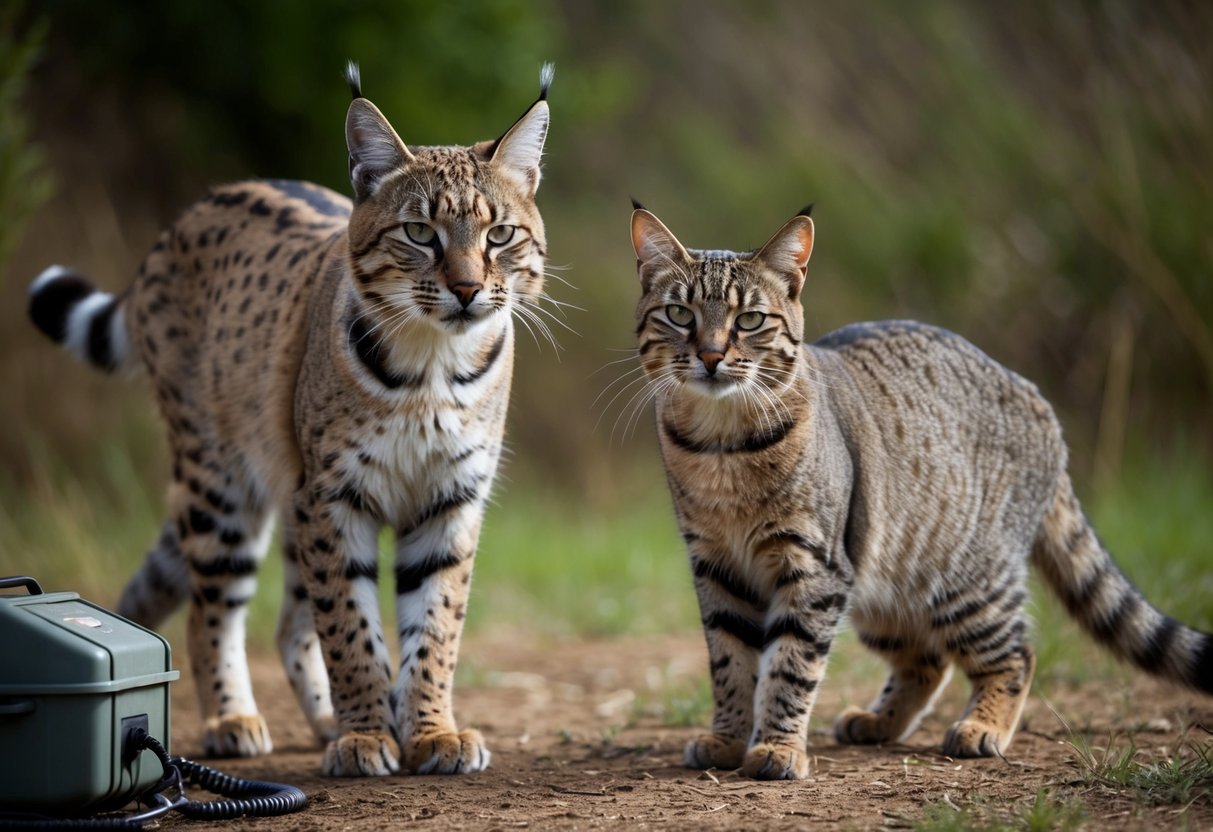
Understanding the conservation status of bobcats is important for their survival. You may also want to learn how to identify and track these fascinating animals. This knowledge helps ensure their protection and highlights their role in the ecosystem.
Conservation Status and Efforts
Bobcats play a vital role in controlling rodent populations and contribute to maintaining a balanced ecosystem. While not currently endangered, conservation efforts are crucial to prevent any decline in their population.
In some areas, habitat loss threatens their survival. Organizations work to protect their habitats, promoting the conservation of land. Laws also help protect bobcats from hunting and trapping, allowing their numbers to stabilize.
You can support these efforts by advocating for wildlife protection and educating others about bobcats’ ecological roles. Understanding their needs helps ensure a future for bobcats and their young, known as wild kittens or bobcat kittens.
Identifying and Tracking Bobcats
To track bobcats effectively, you need to recognize their unique features. Bobcat tracks are usually larger than house cat tracks. They measure about 2 inches across, while house cat tracks are less than 1 inch.
When tracking, look for their distinctive claw marks, which won’t show up in prints like other carnivores. Bobcats tend to leave deeper impressions because of their size and weight.
Using camera traps or observing their habitat can also provide insights into bobcat behavior. You can find information on their typical paths to better understand how they navigate their territory. This knowledge strengthens conservation efforts by allowing you to report any sightings or signs of their presence.


